
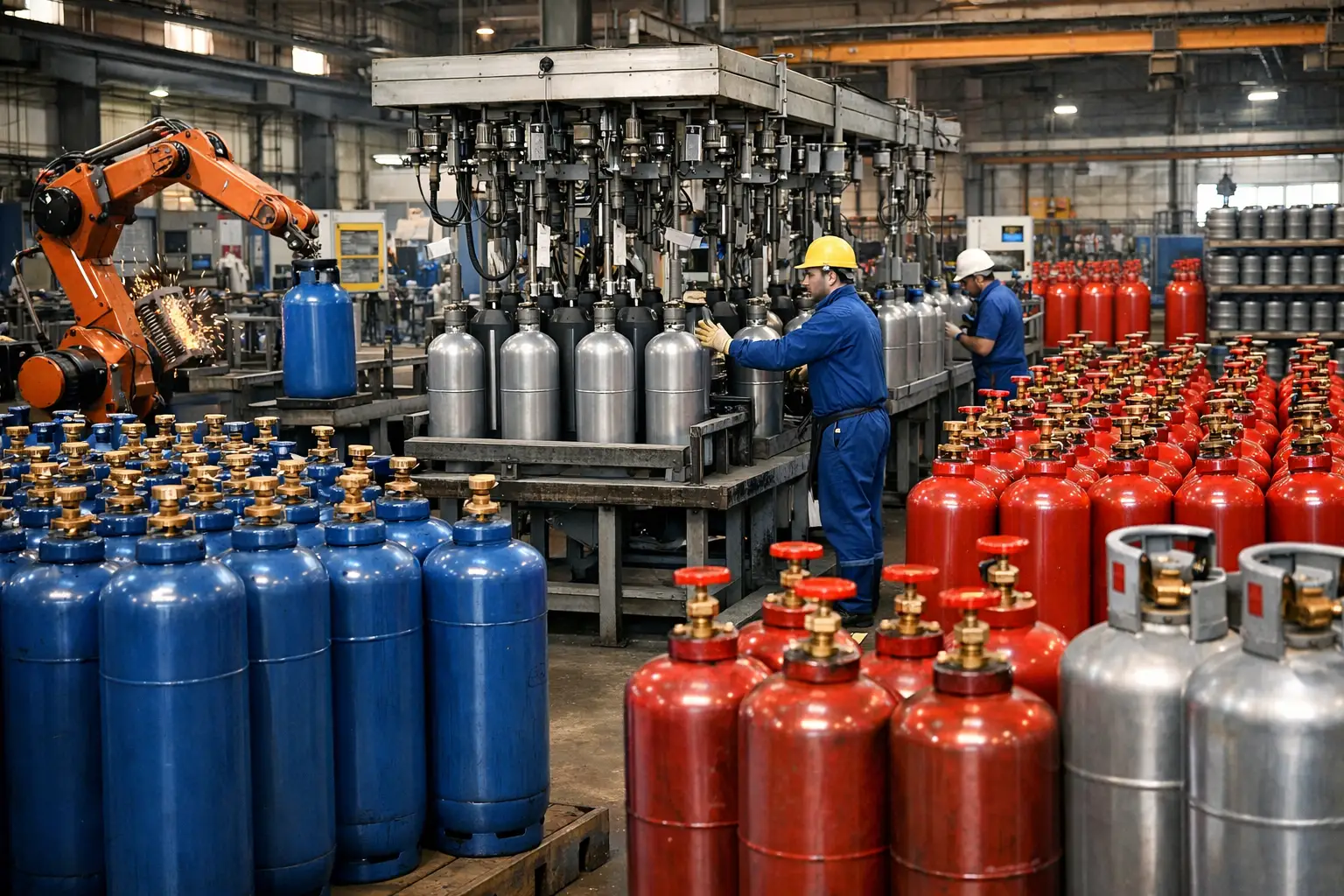
Businesses in the energy field face a major expense when buying LPG gas cylinders. This applies to high-volume distributors in Africa, construction companies in Latin America, or hospitality operations in Southeast Asia. Buyers need to grasp the cost breakdown. Such knowledge helps shift from basic price checking to full value assessment.
As a top producer, Mintai Cylinder knows that openness builds strong B2B ties. This guide explains the details of LPG cylinder costs. It aims to aid smart buying choices.
The cost of an LPG cylinder changes often. It includes various factors.
Raw Material Costs (Steel): High-strength carbon steel forms the main part of a cylinder. Examples include HP295 or Q235B. Changes in the worldwide steel market affect production expenses right away. Mintai Cylinder uses bulk buying and efficient manufacturing processes. These steps keep prices steady during steel market ups and downs.
Base Cost of Fuel: The cylinder holds the gas. Yet the market rate for Propane or Butane sets the filling expense. These prices move with worldwide supply and demand.
Government Taxes and Duties: Import fees, Value Added Tax (VAT), and energy charges differ by nation. Places like Nigeria or South Africa add special fees for safety checks and approvals (like SONCAP or SANS). Buyers must include these in the total arrival cost.
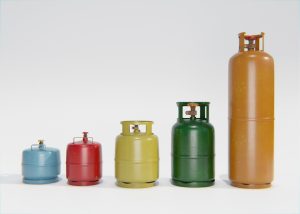
Transportation and Delivery Charges: Shipping heavy steel cylinders depends on the distance. Mintai Cylinder cuts these expenses by adjusting cylinder sizes (e.g., the 6kg 14.4L model). This design boosts container fill rates. As a result, importers pay less freight per item.
Safety, Maintenance, and Compliance: Quality checks add to the price. Each Mintai Cylinder faces strict pressure tests (up to 34 bar for a 6kg unit). These tests guarantee reliability over time in tough settings.
The energy sector reacts strongly to worldwide changes.
Global Crude Oil Trends: LPG comes from natural gas work and crude oil processing. So when Brent or WTI crude rates rise, LPG base costs usually rise too.
Seasonal Demand: Northern Hemisphere heating needs grow in winter. This pushes prices up around the world. In contrast, many growing markets see demand for camping gas cylinders rise during holiday trips.
Currency Exchange Rates: International steel and energy deals use USD mainly. Local money weakening in buyer countries can raise cylinder costs quickly. Mintai Cylinder teams up with steady partners. The company provides flexible minimum order quantities and aid to handle these monetary changes.
In B2B deals, order size offers the best advantage.
Economy of Scale: Greater monthly use or bigger single orders lower the price per unit. Mintai Cylinder focuses on large supplies. The firm gives good wholesale rates for full container loads (40ft HQ).
Logistics Proximity: How close the business sits to the entry port or factory site sets the final delivery expense. Compact, easy-to-stack models—such as the 6kg portable cylinder—come from Mintai Cylinder. These designs lighten the shipping load.
Contract Duration: Spot buys for short terms expose buyers to sudden price jumps. Extended agreements bring steady rates and reliable delivery times. Standard orders at Mintai Cylinder take about 35 days.
Quotes deserve more than a quick look at the total.
Detailed Price Breakdown: Clear offers list cylinder costs apart from valve costs (e.g., POL, CGA, or BS types). LPG cylinder suppliers also note any extra charges for custom branding.
Pricing Models: Choose fixed rates for steadiness, though they might cost more. Or pick variable rates tied to markets. Mintai Cylinder supplies varied OEM/ODM choices to fit business plans.
Escalation Clauses: Learn how extra fuel fees or material changes get managed. Defined rules stop surprise charges after signing.
Today’s buying uses facts, not hunches.
Digital Market Tracking: Tools that follow commodity prices help watch HP295 steel and LPG rates. Buyers can plan large buys during low market times.
Procurement Software: Cost review programs let users check offers from various sellers. At Mintai Cylinder, detailed specs (height, diameter, wall thickness) make fair comparisons simple in audits.
The lowest-priced cylinder may end up costing the most later.
Total Cost of Ownership (TCO): Think about the cylinder’s lifespan. A Mintai Cylinder made with quality HP295 steel suits ongoing supply and reuse in developing areas. This cuts replacement needs.
Supplier Reliability: Include delay costs in planning. Firms with solid export history to Africa, Latin America, and Southeast Asia—such as Mintai Cylinder—prevent business stops from shipping issues.
After-Sales and Technical Support: Strong technical help proves useful for local safety rules or valve fits.
These steps lead to equitable agreements:
Value Over Price: Skip the cheapest option if it skimps on steel strength or valve standards. Field breakdowns bring higher liability and reputation harm than upfront savings.
Value-Based Contracts: Set deals with quality promises, fixed delivery schedules, and consistent standards.
Industry Benchmarking: Check supplier rates against standard wholesale figures for steel and LPG gear often. Mintai Cylinder stays open with factory-direct sales. This skips dealer add-ons.
Real-world reliability is best confirmed through direct engagement. Mintai Cylinder is proud to announce our participation in the 39th AIGLP Congress, the most significant LPG event in Latin America, held from March 24 to 26, 2026, in Buenos Aires. As we join over 1,800 participants to discuss the latest technical-operational and regulatory advancements, we invite you to visit us at the 39th AIGLP Congress Booth 64. Whether you are looking to evaluate our high-strength HP295 steel cylinders or discuss customized OEM/ODM solutions for your local market, our team will be on-site at the trade fair to provide expert insights into optimizing your bulk procurement costs.
Buying LPG gas cylinders demands insight into material expenses, market patterns, and shipping. Emphasizing Total Cost of Ownership and linking with a skilled maker like Mintai Cylinder lets B2B buyers gain secure, dependable, and budget-friendly energy options for their areas.
A: Several elements shape the price of LPG gas cylinders. These include the base cost of propane or butane, government taxes and duties, transportation charges, and safety, maintenance, and compliance costs. Market shifts, like global crude oil price changes, also cause LPG price variations.
A: Companies buying LPG cylinders in large amounts often earn volume-based discounts. Contract duration matters too. Long-term contracts deliver more stable pricing than brief ones. Partnering with providers like Mintai Cylinder simplifies buying and trims total expenses.
A: Yes, Mintai Cylinder provides customized LPG solutions. Options cover logo printing, custom colors, and valve types suited to local needs. Such changes aid branding and meet area rules.
A: Transportation charges play a big role in LPG cylinder pricing. Factors like delivery location set the expense. Far or tough spots raise fees. Closeness to the seller’s hub lowers shipping costs.
A: Comparing LPG cylinder suppliers goes past the price. Check supplier reliability, on-time delivery, customer support, and compliance with safety standards. Look at service level agreements (SLAs) and value-added services to pick the top option.