
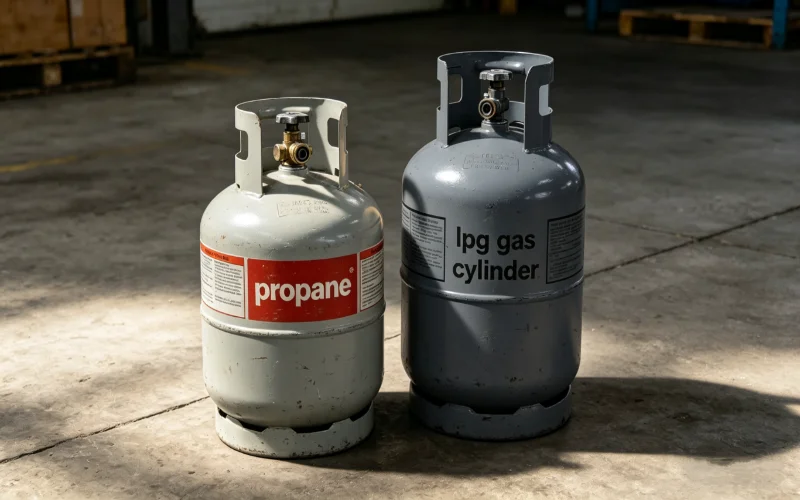
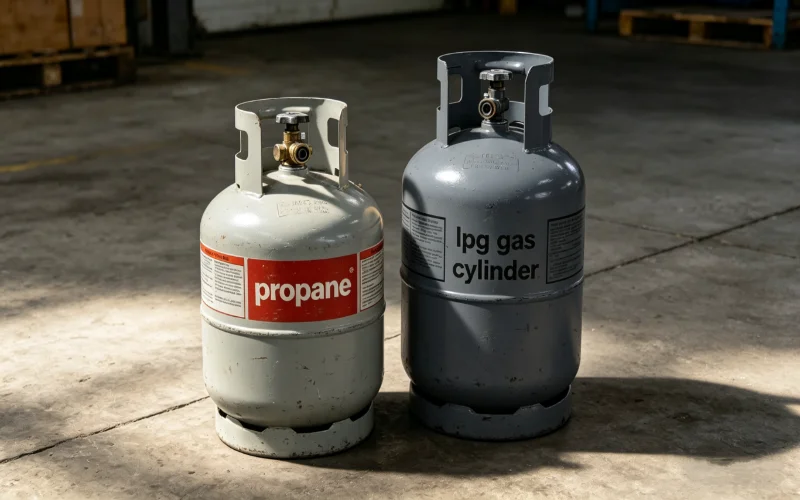
Propane vs LPG gas cylinders for business — a subject that frequently stirs discussion among managers who depend on canned fuel for cooking, heating, or running machinery. Plenty of folks think the pair are exactly the same. However, in reality, certain technical and practical differences can impact expense, dependability, and security. Restaurants, industrial facilities, and logistics companies all face this choice.
Propane (C₃H₈) serves as a clean hydrocarbon that gives steady burning. LPG, by contrast, acts as a versatile mix of propane and butane tailored to local weather and power needs. This article explores their chemical differences, performance characteristics, pros and cons for business operations, and how premium cylinder quality — such as that from Mintai Cylinder — plays a decisive role in long-term value.
Propane counts as a lone-component hydrocarbon. Its boiling point sits around –42°C. The vaporization speed stays reliable even during chilly spells. This makes it perfect for harsh winter use. Liquefied Petroleum Gas (LPG) means a combination of propane, butane, or small amounts of other hydrocarbons squeezed into liquid state. The makeup shifts by area. Cooler spots lean toward more propane for improved vaporization. Hotter areas might include extra butane to cut expenses.
Both gases get stored under pressure in sturdy steel containers made to global rules like ISO4706 or EN1442. The 6kg LPG Gas Cylinder from Mintai Cylinder suits camping, outdoor pursuits, and basic home gas requirements. It features a tough steel build along with careful safety features. These engineering practices also apply to commercial-grade cylinders used in restaurants or factories.
Propane brings reliability from its clear makeup. LPG’s changing mix offers adaptability over weather types and uses. This counts a lot when weighing propane vs lpg gas cylinders for business. Supply steadiness and price savings hold equal weight there.
| Feature | Propane | LPG (Propane + Butane Blend) |
| Boiling Point | ~–42°C | Varies (~–0.5°C to –30°C depending on ratio) |
| Cold Weather Performance | Excellent | May require higher propane ratio |
| Energy Content per kg | Slightly higher | Comparable; blend adjustable |
| Vapor Pressure Range | 18–30 bar typical | Similar; depends on mix |
| Flame Characteristics | Hotter blue flame | Tunable based on application |
| Cost Efficiency | Stable pricing but less flexible | Often lower landed cost |
Propane’s chief strength comes from its skill to turn to vapor in below-zero temps. This proves vital for high-elevation spots or cooled areas. LPG mixes with lots of butane might face slower vaporization in severe cold. Still, they work well in mild zones where many firms run. Take a busy warehouse in a temperate city: LPG handles daily forklift refills smoothly without hiccups, as seen in operations across Southeast Asia where blends adjust to local supply chains.
Both fuels follow alike safety steps. They add smell agents to spot leaks. Valves must meet national certification. Regular checks keep the structure sound. The cylinder body relies on approved steel material. Staff carry out pressure checks prior to shipping. This careful making cuts down dangers in moving or reloading.
On the practical side, LPG’s adaptability often translates into better pricing flexibility and easier sourcing through regional distributors — advantages that appeal strongly to large-volume commercial users balancing performance with budget control.
Propane Cylinders
LPG Cylinders
For companies checking full ownership expenses — like refill times, storage space, upkeep schedules, and emission rules — the best lpg cylinders for commercial use commonly beat pure propane systems in everyday usefulness. Real data from European logistics firms indicates LPG setups cut downtime by up to 20% in mixed climates.
Restaurants & Commercial Kitchens: Cooks like even flame handling with little soot. Good LPG mixes achieve this well over several stoves. They avoid excess pressure troubles. In a high-volume diner, this means fewer flare-ups during peak hours.
Warehousing & Logistics: Forklifts using LPG swap containers fast between work periods. No interruptions occur. The even pressure traits aid both inside warmers and outside fuel points. African transport hubs report reliable runs in dusty conditions with these.
Industrial & Manufacturing: Tasks such as metal warming or drying need changeable flame power. LPG’s flexible energy release matches just right. Factories in Asia use it for consistent output in 24/7 shifts.
Hospitality & Events: Movable food service relies on trustworthy containers that move between spots easily. The 9kg LPG Gas Cylinder from Mintai Cylinder fits needs for routine cooking. It also covers outdoor tasks.
In brief: while propane leads in very cold transport jobs (consider cooled storage areas), most standard businesses see that solid LPG mixes bring better overall gain when looking at propane vs lpg gas cylinders for business choices.
Choosing a fitting provider means more than price checks. Firms should assess:
Mintai Cylinder emerges as a reliable lpg cylinder manufacturer with machine-driven lines focused on large B2B deliveries. Mintai Cylinder excels in crafting sturdy LPG gas cylinders globally. The emphasis remains on providing secure, steady, and long-lasting gas holding choices. Every item passes several check stages. These cover weld strength, valve seal precision, and outer layer toughness.
Main benefits cover:
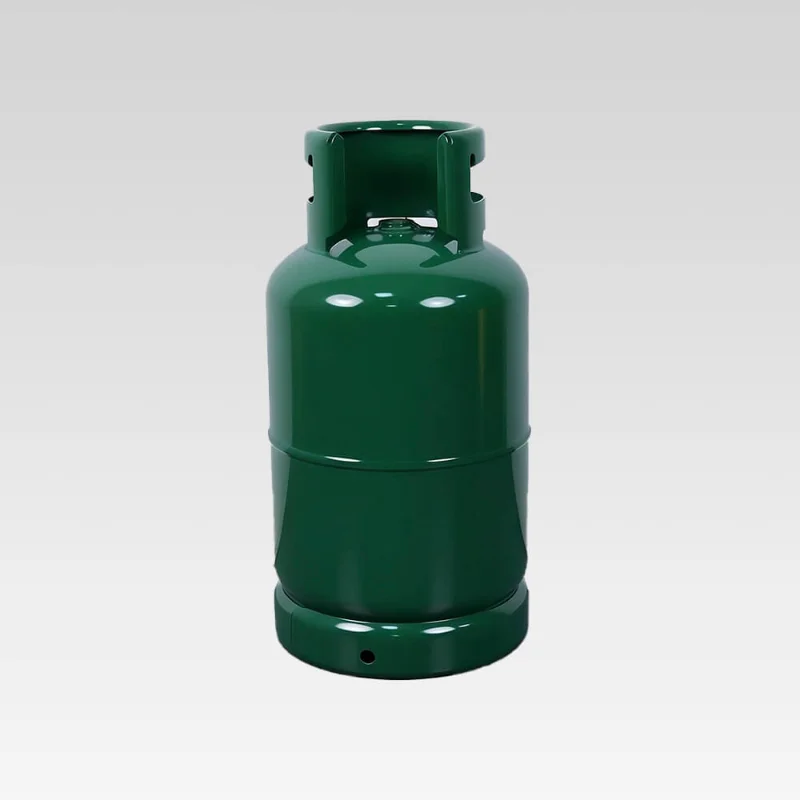
Be it a 6kg easy-carry type or a 12.5kg eatery-level piece made with HP295 steel sheets checked at 31 bar pressure levels — Mintai supplies the best lpg cylinders for commercial use. It balances security with long-run savings.
In any thorough lpg vs propane cylinder comparison, no fuel sort claims victory in all cases. Propane shines in tough cold spots due to its low boiling point. Yet, LPG’s range makes it great for most company work aiming for reliable warmth at reduced price per reload.
Businesses ready to upgrade their energy infrastructure can rely on Mintai Cylinder’s proven engineering heritage — delivering robust steel-built solutions that enhance efficiency while maintaining strict safety standards across global markets.
Q1: What is the main difference in composition between propane and LPG used in commercial gas cylinders?
A: Propane is a pure hydrocarbon (C₃H₈), while LPG is typically a blend of propane and butane adjusted by region to optimize vaporization performance and cost efficiency.
Q2: In which business applications does propane typically outperform LPG blends, and why?
A: Propane performs better in extremely cold environments such as refrigerated warehouses or outdoor logistics hubs because it continues vaporizing effectively below –40°C where butane-rich blends may struggle.
Q3: How do boiling points and energy content influence the choice between propane and LPG cylinders for commercial kitchens or forklifts?
A: Kitchens benefit from stable flames achievable with both fuels; however, forklifts operating outdoors year-round often favor pure propane because its lower boiling point guarantees steady vapor flow during winter months.
Q4: What safety and certification standards should procurement teams evaluate for LPG cylinders in industrial or warehousing settings?
A: Look for compliance with ISO4706 or EN1442 standards along with visible test stamps showing working pressures around 18–30 bar; manufacturers like Mintai conduct individual pressure tests before delivery to confirm structural integrity.
Q5: Can the same steel cylinder design safely handle both pure propane and LPG blends depending on regional gas supply?
A: Yes — provided the cylinder meets rated pressure requirements (typically above 21 bar) and uses corrosion-resistant materials such as HP295/Q235B steel; these specifications allow safe interchangeability across most global supply networks managed by certified filling stations.