

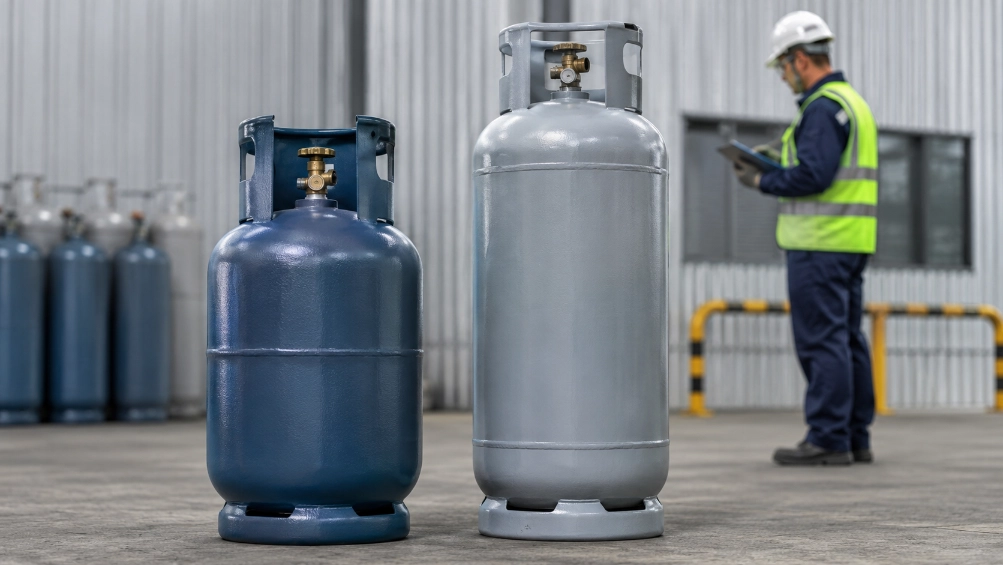
In global gas equipment sourcing, the terms LPG cylinder and propane cylinder are frequently used as if they describe the same product. However, importers learn fairly soon that they do not always have the same behavior once regulatory matters, filling processes, and customs inspections are involved.
As far as imports are concerned, most problems are related more to the specifications of the cylinder than to the gas it contains. The pressure ratings, valve configuration, marking, and compliance papers are the elements that make the difference between a successful inspection and a delayed shipment.
LPG typically refers to a mixture of propane and butane, while propane is a single-component gas with more stable vapor characteristics. The difference is technical, but it directly affects cylinder design requirements and how local markets approve usage.
أسطوانة مينتاي is a welded steel LPG cylinder manufacturer based in China, supplying export markets with a range of standard household and commercial cylinder sizes. In most projects, the focus is less on branding and more on keeping specifications aligned with the destination country’s safety rules and filling systems.
Propane generally has higher and more stable vapor pressure, especially in low-temperature environments. LPG mixtures vary depending on the propane-to-butane ratio, which makes performance less predictable across regions.
This difference affects:
In colder regions, propane-heavy systems are more common because they reduce pressure drop issues during winter. In warmer markets, LPG blends are often preferred for flexibility and availability.
One recurring issue in global sourcing is assuming product names equal technical standards.
However, regulators and filling stations usually ignore naming. What they check instead is:
This is where import mismatches usually appear.
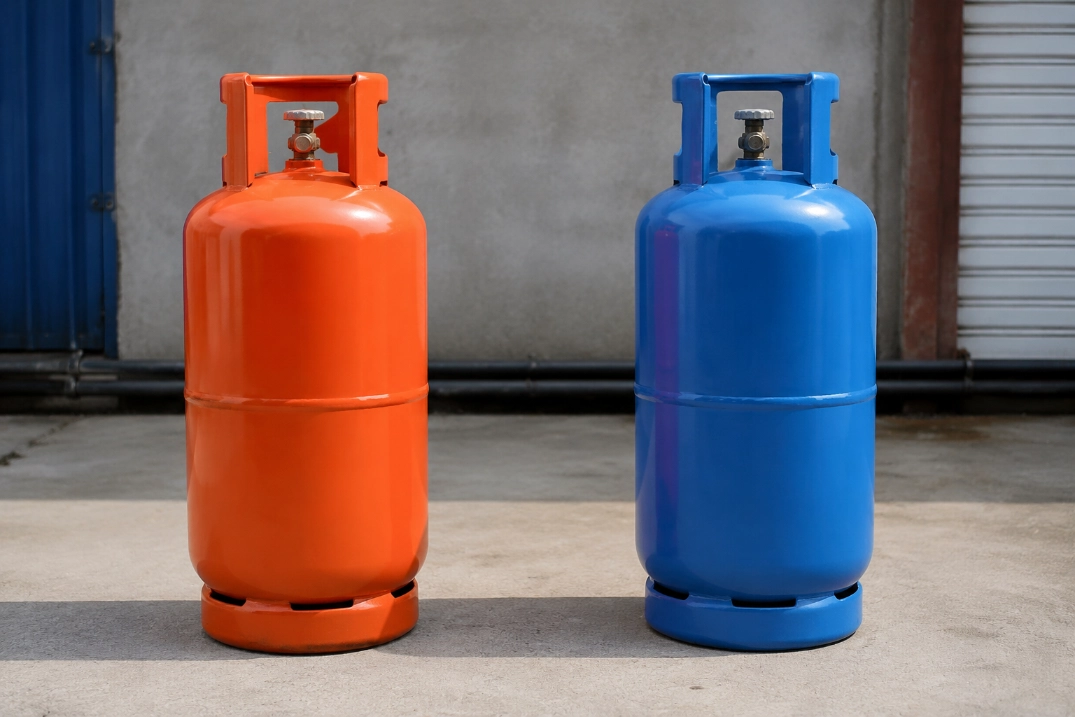
Before confirming bulk orders, importers typically verify:
Even small inconsistencies can affect downstream filling operations, especially in markets with strict calibration systems.
Valve mismatch is still one of the most common rejection points in international shipments.
Key verification points include:
A cylinder body that fully meets structural requirements can still be rejected if the valve does not match local systems.
Most import destinations require permanent identification markings for safety tracking:
These markings are often reviewed before physical inspection during customs clearance.
Compliance is usually confirmed through supporting test records, including:
In many cases, documentation review happens before cargo inspection, especially for pressure vessel products.
أسطوانات غاز البترول المسال are pressure vessels, which means structural stability directly affects long-term safety.
Key focus areas include:
In large-volume export shipments, batch consistency often matters more than individual unit performance.
In real use conditions, coating quality plays a major role in service life.
Common field issues include:
These issues usually appear after delivery, not during factory inspection, which is why coating stability is closely monitored in export production.
In B2B cylinder sourcing, consistency is often more important than design variation.
Importers usually evaluate:
Mintai Cylinder operates automated production lines for welded steel LPG cylinders, supporting consistent output across different standard sizes used in household and commercial markets.
Different regions may require different compliance documents, but most markets expect:
Delays in customs are often caused by incomplete paperwork rather than physical product issues.
Even experienced buyers encounter avoidable issues:
Most of these problems only appear after arrival, when distribution has already started.
Mintai Cylinder focuses on steel LPG cylinder manufacturing for export-oriented markets, covering household, commercial, and industrial use scenarios.
Typical production range includes:
In practice, many importers pay more attention to consistency across batches than to individual specifications. Even small variations in valve alignment or weight tolerance can affect filling efficiency in downstream operations.
Customization is available depending on destination market requirements, including valve configuration, marking specifications, and packaging format.
LPG cylinder and propane cylinder sourcing is less about terminology and more about compatibility. Once cylinder specification, valve system, pressure rating, and compliance documentation are aligned with the destination market, most operational risks naturally decrease.
In global trade, the main challenge is rarely production quality alone—it is specification mismatch across different regulatory systems and filling infrastructures.
Mintai Cylinder supports international buyers with welded steel LPG cylinder solutions designed for export compliance, stable production quality, and regional specification requirements. For bulk orders, technical specifications, or export compliance support, اتصل بشركة مينتاي للأسطوانات to get tailored cylinder solutions for your target market.
Q1: What is the key difference between an LPG cylinder and a propane cylinder?
A: LPG cylinders are designed for mixed gas compositions, while propane cylinders are optimized for higher and more stable pressure behavior in single-gas applications.
Q2: Can LPG cylinders be used for propane applications?
A: In some cases yes, but only when pressure rating, valve compatibility, and local regulatory standards match propane usage requirements.
Q3: What should importers check before placing bulk LPG cylinder orders?
A: Key checks include pressure rating, valve system compatibility, cylinder markings, test documentation, and destination certification requirements.
Q4: Why are LPG cylinder shipments sometimes rejected during customs inspection?
A: Common reasons include missing markings, incomplete test reports, incorrect valve systems, or non-compliance with local safety standards.
Q5: What role does Mintai Cylinder play in export supply?
A: Mintai Cylinder produces welded steel LPG cylinders in multiple standard sizes for household and commercial use, with production designed to meet export market specification requirements.