
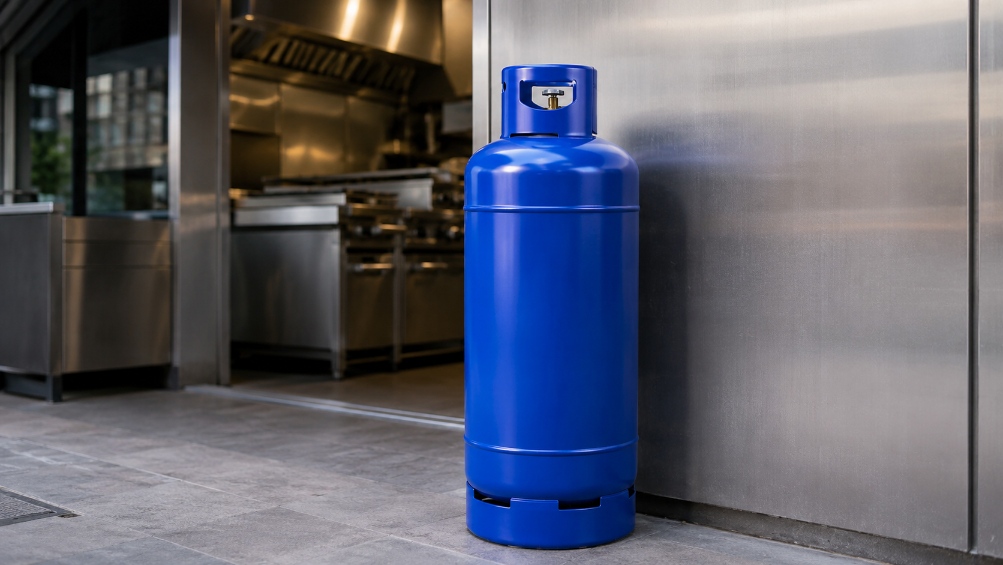
Pressure rating counts as one key aspect buyers tend to miss when picking an LPG cylinder for business and factory needs. Capacity in kilograms or liters often draws more notice, yet real performance and safety rest on working pressure, test pressure, material grade, and valve fit. Restaurants, workshops, and distributors that handle frequent refills find these details shape safe and steady gas supply.
Mintai Cylinder, a professional LPG cylinder manufacturer, makes refillable steel LPG cylinders for global B2B supply. The range covers small household models and larger 45kg/100lbs units built for commercial kitchens and light industrial sites. The 9kg LPG Gas Cylinder from Mintai Cylinder fits daily cooking needs. It also works for outdoor use and light commercial tasks. The same design approach carries over to heavier cylinders that face higher pressure demands.

A pressure rating shows how much internal pressure a gas cylinder is designed to handle during use and testing. In the LPG industry, this matters because liquefied petroleum gas changes pressure with temperature, filling level, handling conditions, and storage environment.
A commercial kitchen may run several burners for hours. A food processing shop may use gas-fired equipment in repeated cycles. A small industrial site may store multiple LPG cylinder units for heating or drying. These are not occasional home cooking conditions.
Pressure rating affects several practical points:
For B2B buyers, pressure data is part of cost control, safety planning, and supplier evaluation.
Working pressure refers to the normal pressure level that an LPG cylinder is designed to handle during regular service. It is one of the first figures buyers check when comparing commercial-use models.
Mintai Cylinder’s 45kg/100lbs LPG gas cylinder has a working pressure of 1.8 MPa. This figure helps buyers judge whether the cylinder fits common LPG storage and supply conditions for restaurants, small businesses, and light industrial users.
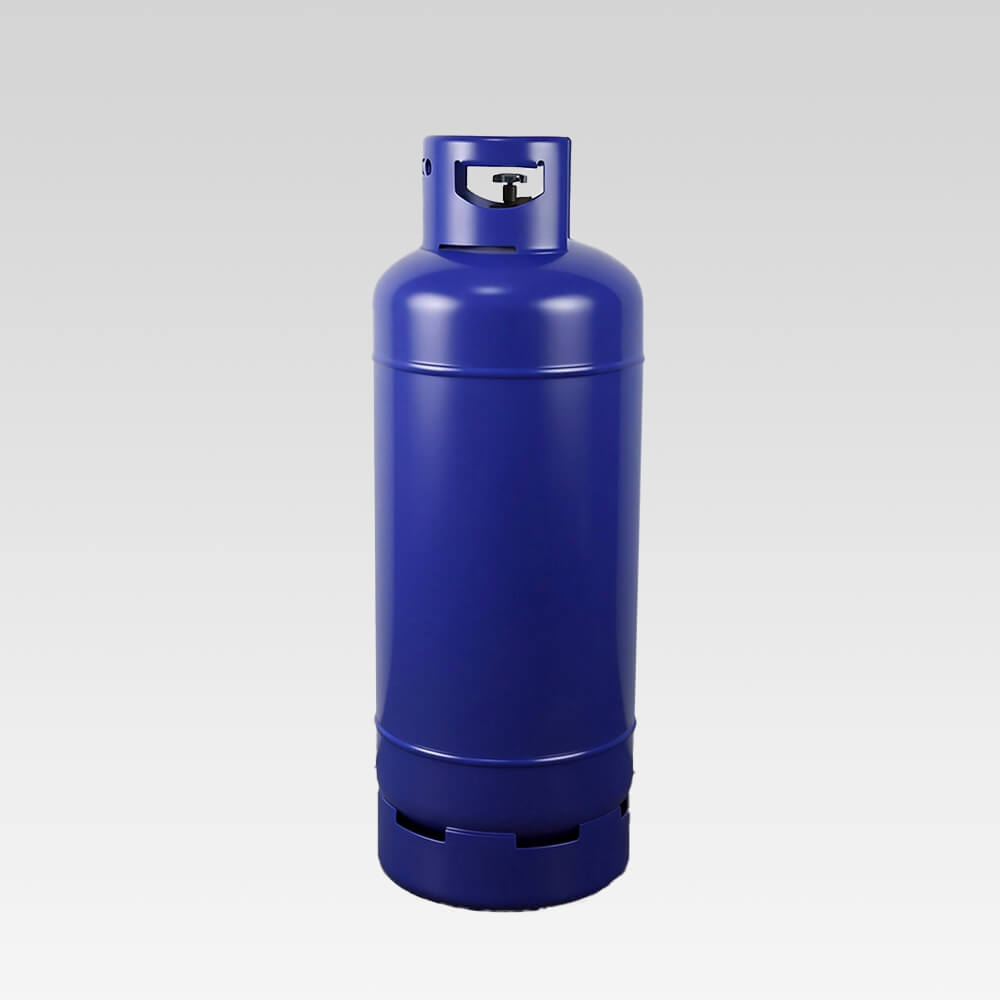
Test pressure is higher than working pressure. It is applied during inspection to check whether the cylinder body can tolerate pressure above normal service conditions. Mintai Cylinder’s 45kg/100lbs LPG cylinder lists a test pressure of 3.4 MPa.
This does not mean the cylinder operates at that level every day. Instead, it shows the safety margin designed into the product.
Burst testing pushes the cylinder beyond normal limits to verify structural strength. For distributors and refill stations, this test helps confirm that the LPG cylinder has a verified margin between normal service pressure and failure pressure.
Many buyers start with size: 6kg, 12.5kg, 15kg, 20kg or 45kg. Size affects storage volume, refill frequency, transport cost, and user convenience. But cylinder size does not tell the whole story.
| Selection Factor | What It Means | Why It Matters for B2B Use |
| Cylinder capacity | LPG filling size, such as 45kg | Affects refill frequency and operating time |
| Water capacity | Internal cylinder volume, such as 108L | Helps define storage volume and cylinder design |
| Working pressure | Normal pressure design level | Guides safe daily use |
| Test pressure | Higher inspection pressure | Shows pressure verification margin |
| Material | Steel grade such as HP295 or Q235B | Affects strength and durability |
| Valve system | Valve and regulator connection | Affects flow control and user safety |
A 45kg LPG cylinder may suit a restaurant better than a smaller model because it reduces refill interruptions. Still, if pressure rating, valve type, and regulator setup are not matched, the larger cylinder may not deliver the expected performance.
Restaurants need steady gas flow, especially during peak hours. A gas cylinder feeding several burners should not create unstable flame output or pressure-related interruptions. In this setting, a 45kg LPG cylinder is often attractive because it supports longer use between refills.
Common use cases include:
For these users, pressure rating should be reviewed together with regulator type, hose quality, ventilation, and storage position.
Light industrial users may rely on LPG for heating, drying, curing, preheating, or small-scale production equipment. Compared with household use, the gas demand is usually more regular and more demanding.
A suitable gas cylinder for this environment should have:
Mintai Cylinder’s 45kg/100lbs LPG cylinder uses HP295 steel for the cylinder body to ensure pressure resistance, and Q235B for accessories like the protective collar and base ring. These details make it relevant for commercial and light industrial gas supply where longer operating time and stronger cylinder structure are needed.
Outdoor kitchens, BBQ stations, event catering, and mobile food businesses often need cylinders that can be moved, connected, and stored safely in changing environments. Temperature shifts, vehicle loading, uneven ground, and repeated connection work all affect gas system safety.
For this market, pressure rating should be checked along with:
A safe LPG cylinder choice comes from a balanced review of product design and actual working conditions.
Steel remains widely used for refillable LPG cylinder products because it offers strength, durability, and manageable production cost. For commercial buyers, steel quality affects pressure resistance, welding performance, and long-term service behavior.
Mintai Cylinder’s 45kg LPG cylinder lists HP295 and Q235B as material options. This helps buyers connect pressure data with material strength instead of treating the cylinder as a simple container.
Water capacity refers to the internal volume of the cylinder, not the amount of LPG filled by weight. The 108L water capacity of Mintai Cylinder’s 45kg/100lbs LPG cylinder supports its commercial-use positioning.
For distributors, this figure helps compare models more accurately across markets. Two cylinders with similar LPG weight may differ in diameter, height, internal volume, or design details.
Pressure rating means little if the valve and regulator system is wrong. The cylinder, valve, pressure relief device, hose, and regulator must work as a complete gas supply system.
Commercial buyers should confirm:
This is especially important for importers serving different countries. A cylinder model that fits one market may need a different valve or marking system for another.
Mintai Cylinder applies several quality-control tests to check cylinder safety and performance. These inspection steps are relevant for B2B buyers because bulk orders require repeatable quality, not just a good sample.
Hydraulic testing checks the cylinder under pressure using water. It helps verify body strength, weld performance, and leak-proof structure. For pressure-rated LPG cylinder products, this is one of the core inspection steps.
Tightness testing helps detect small leaks after pressure-related inspection. This matters for storage yards, refill stations, and commercial users that keep several cylinders on site.
Bursting tests verify the ultimate pressure limit of a cylinder design. Mechanical tests check durability, impact resistance, weld strength, and material behavior. For wholesalers and distributors, these tests support safer long-term product circulation.
Before choosing a commercial or industrial LPG cylinder, the following checklist can reduce mistakes:
Many cylinder problems start from a rushed purchase decision, especially when buyers compare only price and size.
A 45kg cylinder does not automatically fit every commercial use. Capacity shows storage amount. Pressure rating shows how the cylinder is designed to handle internal pressure. Both are needed.
Different countries may require different valves, markings, colors, or inspection documents. For exporters, this can decide whether a shipment moves smoothly or gets delayed.
Residential users may connect a cylinder to one stove. Commercial users may run high-demand equipment for long hours. The same cylinder size may face very different usage patterns.
Selecting the right LPG cylinder pressure rating helps commercial and industrial buyers balance safety, gas supply stability, refill efficiency, and long-term product value. Working pressure, test pressure, steel material, water capacity, valve matching, and testing records should be reviewed together, not one by one in isolation.
Mintai Cylinder offers refillable steel LPG cylinder products for commercial, household, and light industrial gas supply. For bulk orders, market-specific valve requirements, model selection, or pressure-rating guidance, B2B buyers can contact Mintai Cylinder to discuss a suitable LPG cylinder solution for commercial and industrial applications.
A: Working pressure shows normal stress levels inside the vessel. Test pressure sits higher to confirm mechanical strength before sale.
A: Yes. Its large capacity supports restaurants, cafeterias, small businesses, and light industrial sites that need steady energy over long operating hours.
A: Water capacity shows the internal volume of the gas cylinder. It helps buyers compare cylinder design, storage volume, and suitability for specific LPG filling requirements.
A: Yes. Steel grade such as HP295/Q235B affects tensile strength. Weak material can deform under repeated load cycles.
A: Hydraulic tests check weld strength. Tightness checks find leaks. Burst tests measure maximum endurance. These steps reflect the manufacturing standards behind Mintai Cylinder products in global markets.