
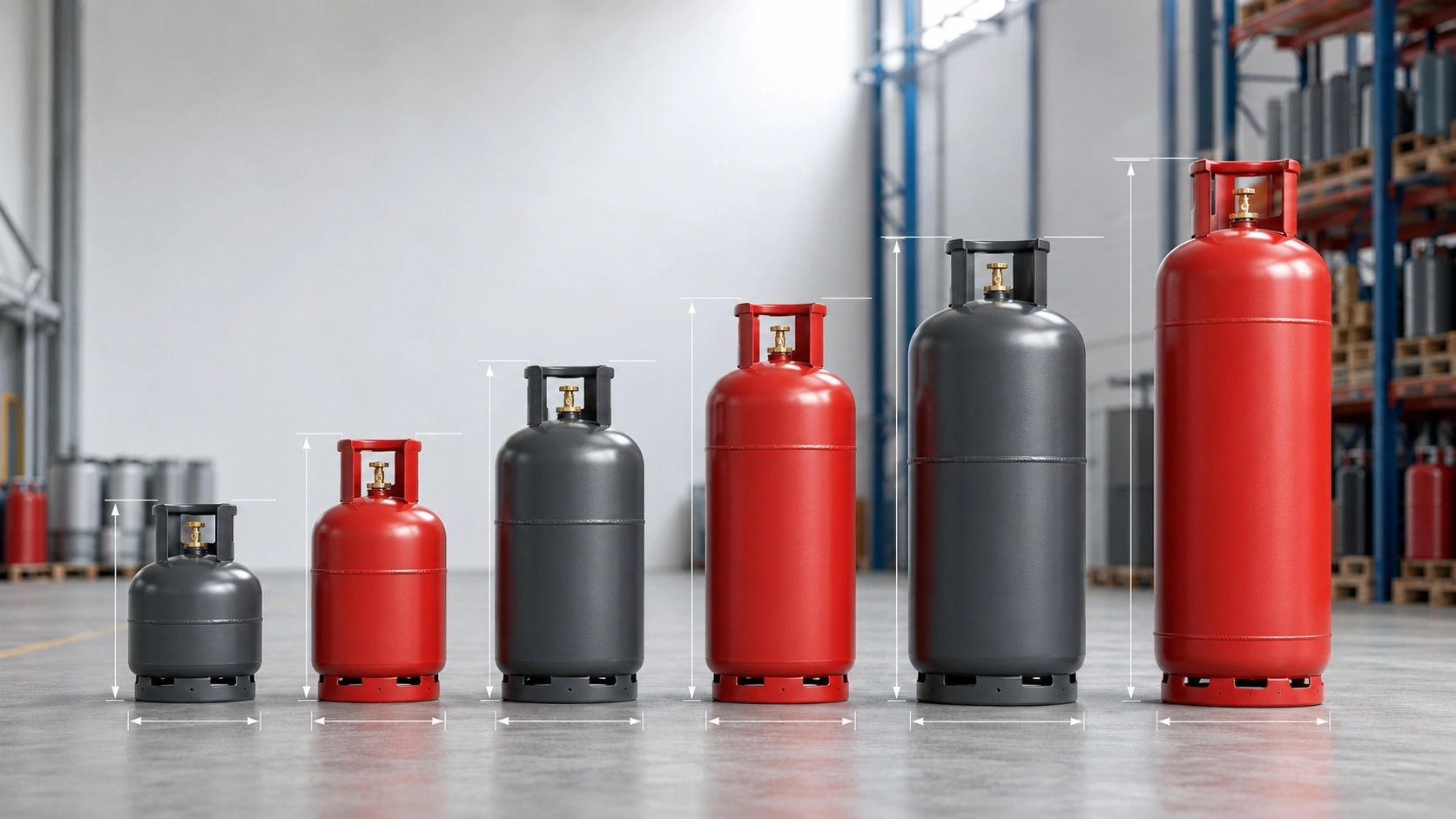
LPG cylinder dimensions are not determined by nominal gas capacity alone. Two cylinders labeled with the same kilogram capacity may differ in height, outside diameter, water capacity, tare weight, valve guard, or foot-ring design. For distributors, importers, filling operators, and equipment teams, those differences can affect replacement fit, handling, storage, and filling-line compatibility. This guide provides a practical LPG cylinder size chart for selected 3kg to 45kg reference models and explains which measurements should be verified before a quotation becomes a purchase order.
The table below summarizes selected Mintai Cylinder steel models in the export LPG cylinder range. It is a comparison tool, not a universal dimensional standard. Final measurements may vary with the approved design, valve, guard, foot ring, applicable market requirements, and other order-specific configurations. Every buyer should therefore verify the final product specification before approving a sample or bulk order.
| Nominal LPG Capacity | Water Capacity | Height | Outside Diameter | Reference Applications |
|---|---|---|---|---|
| 3kg | Confirm against the approved specification | 253 mm | 203 mm | Household cooking, camping, BBQ, and outdoor use |
| 6kg | 14.4 L | 310 mm | 300 mm | Camping, outdoor cooking, light domestic use, and backup supply |
| 9kg | 21.6 L | 520 mm | 300 mm | Household cooking, mobile kitchens, grilling, and light commercial use |
| 12.5kg | 26.5 L | 550 mm | 310 mm | Home kitchens, restaurants, and small businesses |
| 20kg | 47.7 L | 905 mm | 300 mm | Household and commercial cooking applications |
| 45kg | 108 L | 1,200 mm | 380 mm | Restaurants, catering, and higher-consumption commercial use |
The 9kg LPG cylinder dimensions and specifications provide a mid-range reference, while the 45kg LPG cylinder dimensions for commercial use show why larger models require separate handling and storage planning.
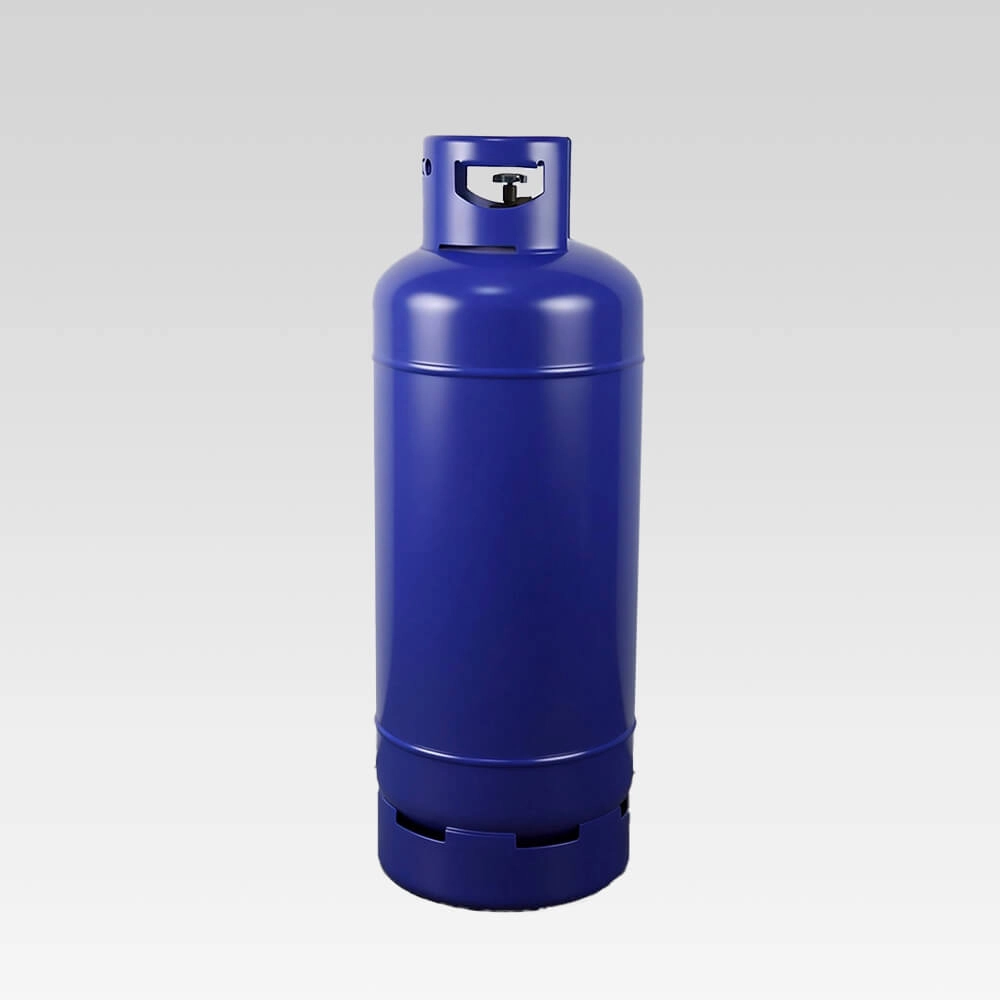
A useful specification chart separates gas capacity, internal volume, and external dimensions. Confusing them can produce an unsuitable replacement or incomplete RFQ.
Nominal LPG capacity is the mass associated with the cylinder designation, expressed in kilograms. Water capacity is its internal volume in liters. A 9kg cylinder is therefore not a 9-liter cylinder, and both values should appear separately in the specification.
Water capacity alone should not set the filling quantity. Permitted fill depends on the approved design, LPG composition, applicable requirements, and filling procedure. Buyers should verify both figures against the product specification and intended filling operation.
Outside diameter affects fit within racks, cages, conveyors, pallets, and vehicles. Overall height can affect clearance and filling-head alignment. Tare and full weight influence handling and delivery, so both should be confirmed for the ordered configuration.
Measurement boundaries matter. Buyers should ask whether height includes the valve, guard, foot ring, or removable cap. Dimensional tolerances are also necessary when an existing installation leaves little clearance.
There is no single external dimension that applies to every cylinder carrying the same nominal LPG capacity. The kg marking identifies capacity; it does not fully define the cylinder geometry.
Shell geometry, material thickness, valve protection, foot-ring construction, and valve choice can change height, diameter, or connection clearance while preserving nominal capacity. Market requirements may lead to another configuration.
Public charts suit early comparison and warehouse screening. They are insufficient when a cylinder must fit an existing cage, filling head, bracket, or exchange pool; compare an approved drawing or sample with the current system.
Start with the existing cylinder, not its capacity label. Record overall height, diameter, foot-ring dimensions, valve position, guard clearance, and tare-weight range. Photograph its rack or filling position and note limited clearances.
Compare these measurements with the proposed replacement. Confirm valve and regulator compatibility separately because similar dimensions do not prove connection compatibility. For tight installations, review an approved drawing or sample before bulk ordering.
Physical dimensions become operational constraints once cylinders move beyond the specification sheet. A model that suits the end user may still be unsuitable for a distributor’s existing plant or delivery system.
Diameter and foot-ring geometry affect conveyor guidance, weighing positions, rack spacing, and stability. Overall height and guard design may affect filling-head access. A heavier model may require different handling even with a similar footprint.
Before adding a size, distributors should check equipment clearances, orientation, valve access, and handling limits with filling, warehouse, and delivery teams. Capacity alone is insufficient when physical interfaces differ.
Diameter and height help estimate storage density but do not determine shipment quantities. Packaging, valve protection, pallet arrangement, stacking, gross weight, and container restrictions also affect loading. Use the supplier’s confirmed packing proposal, not a simple volume formula.
For mixed-size orders, request a packing breakdown for every SKU to plan warehouse zones, receiving equipment, inland transport, and last-mile delivery.
Dimensions should be considered with customer demand. Small 3kg to 6kg cylinders suit portable or low-consumption applications but may circulate more frequently. Mid-range 9kg to 15kg models serve household and light commercial channels. Larger 20kg to 45kg cylinders suit higher consumption when the network can handle their weight and footprint.
This is an initial screen. Consumption, refill behavior, appliance demand, local practices, valve compatibility, and delivery conditions should guide the decision. For demand-based comparison, review how to choose the right LPG cylinder size before defining the SKU mix.
A clear RFQ converts a general “3kg to 45kg cylinders” request into model-specific requirements against which drawings, samples, quotations, and order documents can be compared.
For each capacity, state quantity, nominal capacity, water capacity, height, diameter, tolerance, material, working and test pressure, valve, guard, foot ring, color, branding, and packing. Identify the destination market and applicable project requirements.
For a replacement, attach the existing specification, drawing, or measured photographs. For a new market, explain the filling method, handling equipment, storage limits, and target application.
A capable supplier should distinguish each SKU, identify fixed and configurable dimensions, state tolerances, and define measurement methods. Quotations, drawings, samples, packing details, and purchase orders should reference the same configuration. Unexplained changes are a procurement risk.
Mintai Cylinder presents export models across small, medium, and larger capacities. Buyers should request a final specification for each model and confirm its valve, dimensions, pressure requirements, branding, and packaging before ordering.
An LPG cylinder size chart is a procurement starting point, not a substitute for an approved specification. Capacity, water volume, dimensions, weight, valve, guard, foot ring, and packing affect market and system fit. Buyers can contact Mintai Cylinder with the required sizes, destination market, dimensional limits, valve, drawings or sample details, quantity, application, and packing requirements.
Not universally. Cylinders with the same nominal LPG capacity may have different external dimensions because of their design, valve guard, foot ring, material, applicable requirements, or manufacturer configuration. Verify the specific drawing or product specification.
LPG capacity is the nominal mass of LPG associated with the cylinder, usually stated in kilograms. Water capacity is the cylinder’s internal volume in liters. They should be listed and checked separately.
It depends on the measurement definition used in the specification. Ask the supplier whether the stated overall height includes the valve, guard, cap, and foot ring, particularly when replacement clearance is limited.
Yes. A 9kg capacity label does not define one universal height or diameter. Compare outside diameter, overall height, water capacity, foot ring, valve, and guard before approving a replacement.
Include nominal LPG capacity, water capacity, height, outside diameter, dimensional tolerances, tare-weight requirement, valve connection, guard and foot-ring configuration, pressure requirements, quantity, branding, and packing method.