
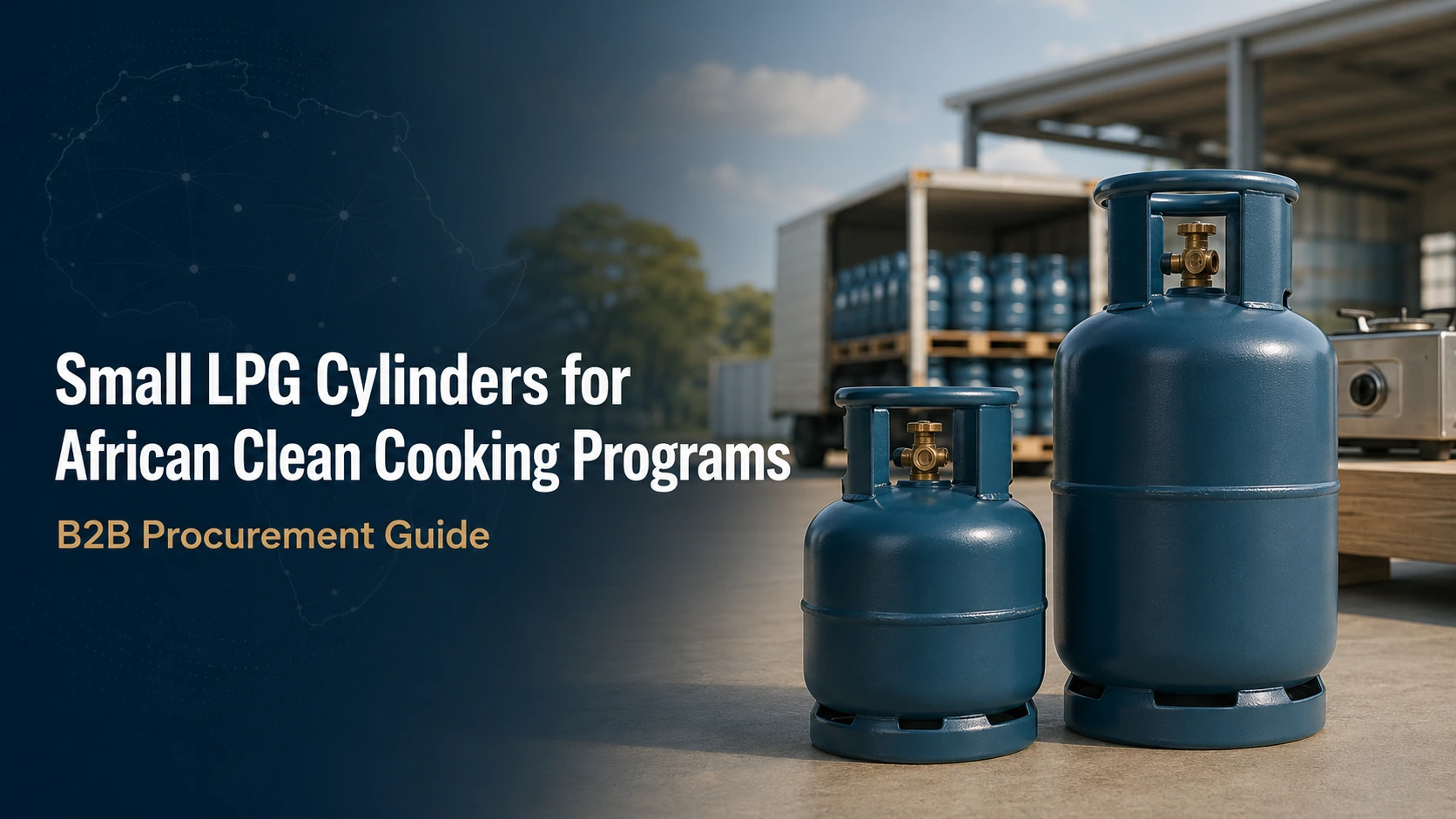
Small LPG cylinders for African clean cooking programs can lower the cash required for a full refill, but a smaller format does not automatically produce a viable program. Buyers must connect cylinder size with household demand, refill access, local approvals, connection compatibility, ownership, and distribution cost. A technically acceptable cylinder can still fail commercially if users cannot afford the next refill or local plants cannot handle it. This guide helps government programs, LPG marketers, importers, distributors, and contractors turn those risks into a procurement specification.
A small refillable LPG cylinder can suit price-sensitive households, first-time LPG users, mobile vendors, and dense urban pilots. A 3kg format generally requires less cash for a full refill and is easier to carry. However, frequent cooks may empty it quickly, increasing travel, filling, and delivery activity.
The customer may pay less per transaction but more per kilogram, while the distributor handles more assets for the same fuel volume. Small cylinders are less suitable when refill points are distant, consumption is high, or bottle-by-bottle delivery is required. Buyers should therefore compare household cash flow, monthly consumption, travel distance, refill frequency, and distribution cost per kilogram.
Small cylinders work best where a reliable filling or exchange network exists near users. The International Energy Agency identifies bottling facilities and specialized transport as important parts of expanding LPG access in Africa.
Buyers should confirm which sizes plants accept, whether handling equipment fits the dimensions, how valves connect to filling heads, and how empties return through the network. Bulk procurement should pause if the proposed size has no accepted refill channel, clear exchange responsibility, or economical return route. A limited pilot with the filling company and dealers can expose these constraints early.
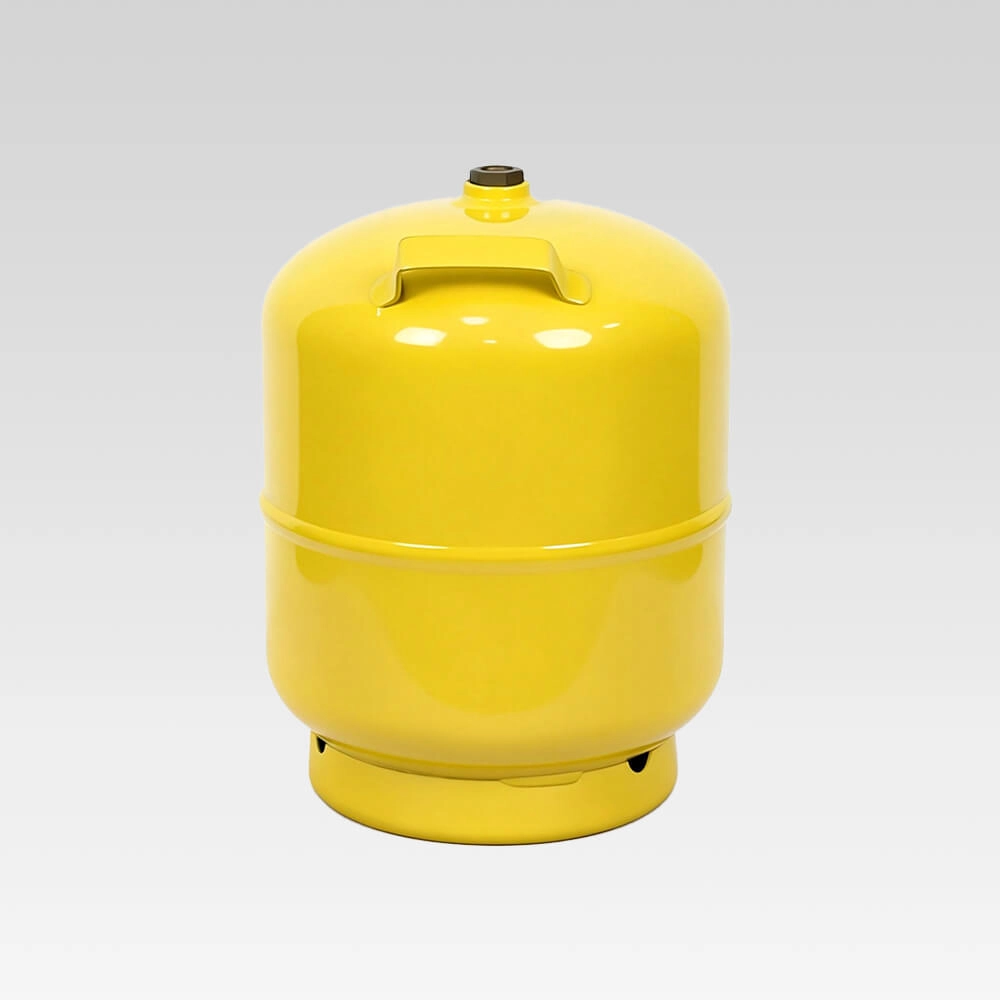
The correct choice depends on who will use the cylinder and how it will circulate.
| Decision factor | 3kg cylinder | 6kg cylinder |
|---|---|---|
| Typical fit | Highly price-sensitive households, occasional cooking, mobile vendors | Regular household cooking, couples, and small families |
| Full-refill cash requirement | Lower | Higher |
| Refill frequency | Higher | Lower |
| Carrying and storage | Easier | Heavier but still manageable in many household settings |
| Distribution workload | More exchanges per unit of LPG | Fewer exchanges per unit of LPG |
| Main procurement risk | High handling and delivery cost | Adoption barrier from the higher initial payment |
The 3kg LPG cylinder for clean cooking projects is relevant when a program prioritizes low refill payments and compact handling. The 6kg LPG cylinder for household cooking may suit regular users who need longer intervals between exchanges.
In both cases, water capacity, dimensions, tare weight, pressure ratings, valve configuration, and destination requirements must be verified against the approved specification.
A single size simplifies filling, sorting, training, spare inventory, and forecasting. A mixed 3kg and 6kg pilot makes sense only when the population contains distinct income and consumption groups; each added SKU increases tracking, storage, and filling work.
Buyers should track adoption, repeat refills, days between exchanges, complaints, bottle loss, dealer handling, and stockouts. A second size should enter the rollout only when transaction data show that it serves a separate segment.
There is no single “African standard” that makes one configuration acceptable everywhere. Buyers must confirm national approvals, import requirements, permanent markings, inspection arrangements, and local LPG rules.
An RFQ should identify the destination and request evidence for the exact model, not merely a general factory certificate. Certificate scope, drawings, capacity, material, pressure rating, and production site should match the quotation. Required markings may include manufacturer identification, serial or batch data, tare weight, water capacity, test information, warnings, and ownership branding.
Multi-country programs need a separate review for each destination. Copying a specification from a neighboring market can create customs, approval, filling, or exchange problems even when the nominal cylinder capacity is identical.
Capacity does not determine connection compatibility. Cylinders of the same size can have different neck threads, valve outlets, sealing methods, regulators, or filling arrangements.
Before production, the buyer should approve the valve drawing, outlet, neck thread, regulator, hose, stove connection, and filling-head requirements. When documentation is incomplete, use verified local components or physical samples. Claims such as “standard valve” should not replace a connected-system test with the intended cylinder, valve, regulator, hose, stove, and filling interface.
Customer-owned cylinders may suit markets with recognized refill channels. Deposit-exchange or branded recirculation gives the marketer more control over inspection, filling, maintenance, and retirement. PAYG can reduce payment barriers but adds financing, service, and data requirements.
A Clean Cooking Alliance study in Nigeria examined a 3kg cage-exchange model because full refills were more affordable and nearby exchange could be simpler than home delivery; it also identified bottle disappearance and distribution economics as risks.
Contracts should state who owns cylinders, receives deposits, authorizes filling, performs inspection, carries loss, and removes units from service.
One cylinder per household rarely represents the full requirement. Assets may be in homes, at dealers, in transport, at filling plants, or in quarantine. Pool size therefore depends on household count, turnaround time, reserve inventory, losses, maintenance, and growth.
Lifecycle cost should include cylinders, valves, markings, packaging, freight, exchange labor, dealer compensation, tracking, inspection, rejection, loss, and retirement. Model these costs per household and per kilogram delivered. When operating data are unavailable, test assumptions in a pilot rather than copying a reserve percentage from another project.
Asset controls should match project scale. Serial numbers and batch records provide basic traceability; digital tracking may be justified for a large exchange pool.
Dealer and filling teams need rules for identifying damaged, corroded, incorrectly marked, or incompatible cylinders and moving them into quarantine. Programs should also define responses to unauthorized filling, cross-filling, missing cylinders, and deposit disputes. Tracking cannot replace physical inspection; the goal is a chain of responsibility that prevents questionable cylinders from returning to service.
“3kg LPG cylinder for Africa” is not a complete RFQ. Quotations should address the same destination, application, LPG and water capacity, dimensions, tare-weight range, material, working and test pressure, valve and neck details, coating, markings, quantity, packing, and documents.
Suppliers also need the ownership model, stove and regulator references, pilot or rollout status, and approval process. Mark unconfirmed fields for technical review; otherwise, attractive prices may represent configurations that are neither comparable nor usable.
Sample approval matters for a new destination, valve, marking layout, coating, or stove kit. Review dimensions, interfaces, markings, finish, packaging, and handling—not appearance alone.
Before production, connect the sample to a controlled drawing and inspection plan covering required material records, dimensional checks, test documentation, marking verification, coating acceptance, and any pre-shipment inspection. Changes to material, valve, drawing, production site, or agreed process should require review.
Supplier selection should begin with evidence, not price. A manufacturer should identify the offered model, explain which details depend on destination approval, provide consistent documents, support sample review, and discuss realistic production and shipment planning.
Mintai Cylinder manufactures LPG cylinders and presents small household formats alongside larger export models on Mintai Cylinder. Its published 3kg and 6kg product information gives project buyers a starting point for discussing water capacity, dimensions, pressure requirements, material, valves, markings, and packaging. Final configurations still need technical confirmation for the destination and application.
The company’s LPG cylinder manufacturing capabilities page states that Mintai was established in 2015, operates six automated lines across a 35,000-square-meter production base, and reports annual output of two million cylinders. Buyers should assess these statements with model-specific documents, approvals, samples, and order controls.
A factory review should examine steel identification, forming, welding, applicable heat treatment, equipment calibration, pressure and leak testing, valve installation, surface preparation, coating, serial marking, and inspection records.
Commercial review should confirm MOQ by model, mixed-size options, lead-time assumptions, packing, change control, inspection access, document delivery, nonconformance handling, and claim timelines. Low unit price has limited value when documents are late or configuration changes are uncontrolled.
Before approving procurement, confirm that:
Small LPG cylinders can improve clean-cooking access, but procurement depends on the complete operating system. Buyers should select 3kg or 6kg formats from affordability and consumption data, verify compliance and interfaces, model lifecycle cost, and approve samples and batch controls before scaling.
Procurement teams can request a project specification review from Mintai Cylinder. Useful details include destination, size, application, material or pressure requirements, valve or regulator drawing, physical sample, pilot and rollout quantities, markings, and target schedule.
There is no universal size. A 3kg cylinder may suit price-sensitive or low-consumption users; a 6kg cylinder may suit regular cooks needing fewer refills. Check refill access, demand, delivery cost, and local acceptance.
No. Approvals, markings, valves, regulators, filling equipment, and exchange practices may differ. Review each destination separately.
Confirm the valve outlet, neck thread, sealing method, regulator, hose, stove connection, and filling-head interface. Use approved drawings or samples and test the connected system.
The pool must cover cylinders with users, at dealers, in transport, at filling facilities, and in inspection or quarantine. Calculate it from household count, turnaround time, reserve needs, loss rate, maintenance flow, and expansion plans.
Required documents depend on the contract and destination, but may include approved drawings, applicable certificates, material and batch records, test documentation, inspection reports, serial or batch lists, valve information, and packing documents.