
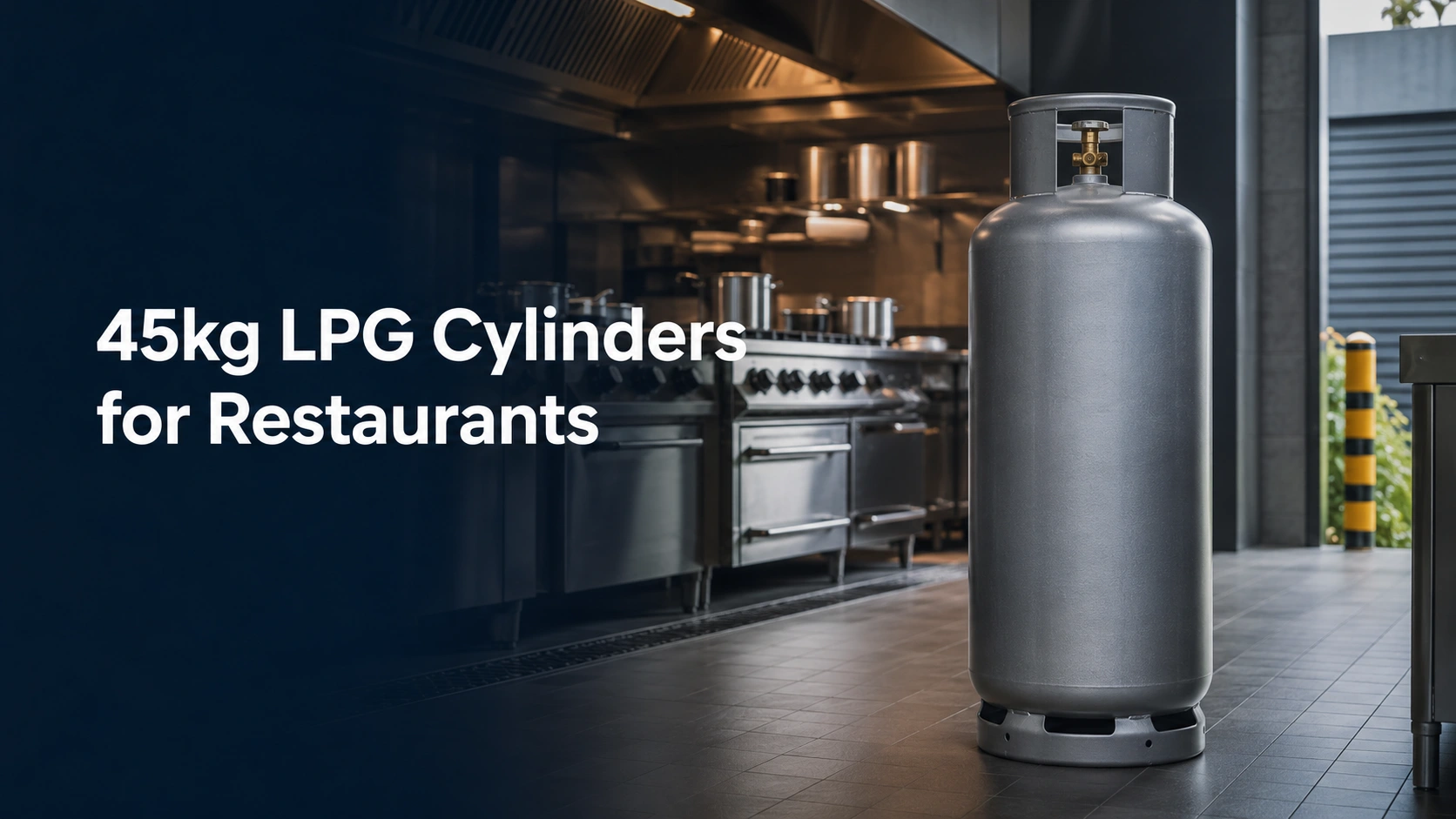
A 45kg LPG cylinder for restaurant use can reduce replacement frequency and support higher fuel consumption than smaller cylinders. However, capacity alone does not determine whether it will supply a commercial kitchen reliably. Buyers must also examine peak appliance demand, operating hours, LPG vaporization, reserve capacity, valve and regulator compatibility, and local installation rules. For restaurants, hotels, cafeterias, bakeries, and central kitchens, the real purchasing question is not simply “Is 45kg large enough?” It is whether the cylinder and supply arrangement can deliver the required gas flow without interrupting service.
A 45kg LPG cylinder is a practical candidate for fixed commercial kitchens that consume gas every day and want longer intervals between cylinder changes. It may serve cooking lines, bakery ovens, catering kitchens, cafeterias, or restaurant equipment, depending on the appliance load and system configuration.
The size is less appropriate when portability is essential, site access makes handling difficult, or the kitchen has a very high continuous demand. A full cylinder is heavy, so storage layout, delivery access, handling equipment, and replacement procedures must be considered before choosing it.
A restaurant with moderate consumption, predictable refill deliveries, and enough approved storage space may find 45kg cylinders easier to manage than several smaller bottles. The larger filling capacity can reduce replacement frequency, but the buyer should still compare daily LPG use with the supplier’s delivery interval.
A single cylinder may be unsuitable for a kitchen operating several high-input burners, ovens, and water-heating appliances simultaneously. It may also be a poor choice when cylinders must be carried through narrow indoor areas or moved frequently. Before purchasing, record the appliance ratings, peak operating schedule, current cylinder consumption, delivery lead time, ambient conditions, and available storage area. These details indicate whether one cylinder, a duty-and-reserve pair, or a larger supply system should be evaluated.
The number of seats in a restaurant does not provide a reliable basis for LPG cylinder sizing. Two restaurants with the same seating capacity may have very different menus, burners, cooking times, and hot-water requirements.
The calculation should address two separate demands. The first is total LPG consumption over a day or week. The second is the maximum gas flow needed when several appliances operate together. A system can have enough stored fuel for several days yet still fail to provide sufficient gas during a busy service period.
Start by listing every LPG appliance connected to the proposed supply. Record its rated fuel input, expected operating hours, and likely percentage of time spent near maximum output. Wok burners and ovens may have different operating patterns, while water heaters can create short but substantial demand.
Estimate each appliance’s daily fuel use, then combine the results using a realistic operating schedule. If the ratings are expressed in MJ/h, kW, or BTU/h, use a consistent conversion method confirmed by the equipment or LPG supplier. Historical cylinder records provide another useful reference for an existing kitchen.
This calculation produces an estimated refill interval, not a fixed promise. Actual use may change with menu volume, equipment condition, seasonal demand, and staff practices. Buyers replacing an existing system should compare calculated consumption with at least several normal operating cycles where records are available.
LPG leaves the cylinder as vapor. The rate at which liquid LPG can vaporize depends on factors such as ambient temperature, LPG composition, remaining liquid level, cylinder surface area, and the duration of gas withdrawal.
A 45kg cylinder may therefore contain usable LPG while struggling to support several appliances at once. Low flame during the busiest cooking period, recurring regulator pressure problems, or heavy cylinder frosting can indicate that the withdrawal rate is too high for the current configuration. These symptoms can also result from regulator, valve, hose, pipework, or appliance problems, so they require professional assessment.
When peak demand exceeds the available vaporization rate, the appropriate response may be additional cylinders connected through an engineered manifold, a larger storage format, or a different LPG supply arrangement. Simply ordering a larger nominal capacity without checking flow demand may leave the original problem unresolved.
A commercial kitchen LPG cylinder system must account for both capacity and business continuity. Running out of gas during food service can interrupt cooking, delay orders, and create an unsafe rush to replace equipment.
| Operating condition | Supply arrangement to evaluate |
|---|---|
| Moderate, noncritical LPG demand | Single 45kg cylinder, subject to load verification |
| Regular restaurant service | Duty cylinder with a reserve cylinder |
| High peak demand from several appliances | Multi-cylinder manifold sized by a qualified professional |
| Frequent changes or unreliable deliveries | Larger reserve capacity or alternative storage |
| Continuous high consumption | Comparison with larger-cylinder or bulk LPG supply |
A single cylinder may be acceptable for a small, intermittently operated kitchen where a brief supply interruption can be managed. For regular restaurant service, a reserve cylinder provides time to arrange replacement after the duty cylinder is depleted.
Manual changeover requires trained staff to recognize an empty cylinder and switch the supply correctly. An automatic changeover arrangement can transfer demand to the reserve side, but its flow capacity, connections, regulator settings, and safety devices must match the installation. Procurement teams should confirm the current changeover equipment before ordering replacement cylinders.
A cylinder manifold allows several cylinders to serve a common supply system. It may be suitable where multiple cooking appliances create demand beyond the practical output of one cylinder or where uninterrupted operation is necessary.
More cylinders are not automatically the right solution. The site must have sufficient approved space, safe access, suitable ventilation, compliant pipework, and a manageable replacement process. For kitchens with sustained high consumption, frequent cylinder handling may become less practical than a larger-cylinder or bulk LPG arrangement. A qualified LPG professional should compare peak demand, delivery frequency, local regulations, installation cost, and future expansion before selecting the system.
Low flame is sometimes blamed on an empty or defective cylinder, but the cause may be elsewhere in the LPG system. If the problem appears only when several appliances operate, the combined demand may exceed the cylinder’s vaporization rate, regulator capacity, or pipework capacity.
First record when the problem occurs. A gradual reduction near the end of a cylinder cycle may indicate low remaining fuel. Pressure loss that appears only during lunch or dinner service may indicate excessive simultaneous demand. Cylinder frosting can accompany rapid vaporization, especially under cooler conditions or when the liquid level is low.
If the same issue continues after a full cylinder is connected, the regulator, valve interface, pigtail, pipework, or appliance should be inspected. Do not attempt to dismantle pressurized components. Provide the technician with equipment ratings, photographs, current cylinder details, regulator markings, and a description of when the fault occurs. These records help distinguish a cylinder-sizing problem from an installation or appliance fault.
The label “45kg LPG cylinder” does not define every product detail. Dimensions, water capacity, working pressure, construction, valve outlet, markings, and applicable standards may differ by destination market and cylinder design.
The 45kg designation normally refers to the intended LPG filling mass. Water capacity describes the cylinder’s internal volume and should not be interpreted as the amount of LPG filled by weight. Tare weight is the mass of the empty cylinder and is needed for filling control, handling, and replacement checks.
External height and diameter determine whether the cylinder fits the storage layout, transport rack, filling facility, and existing restraint system. Buyers replacing a current commercial kitchen gas cylinder should record the full nameplate, overall dimensions, water capacity, tare weight, valve outlet, and applicable standard instead of ordering by filling mass alone.
Mintai Cylinder’s 45kg/100lbs LPG gas cylinder for commercial use lists a height of 1,200 mm, an outside diameter of 380 mm, and a water capacity of 108 L. These values describe that product and should be verified against the final specification and destination-market requirements.
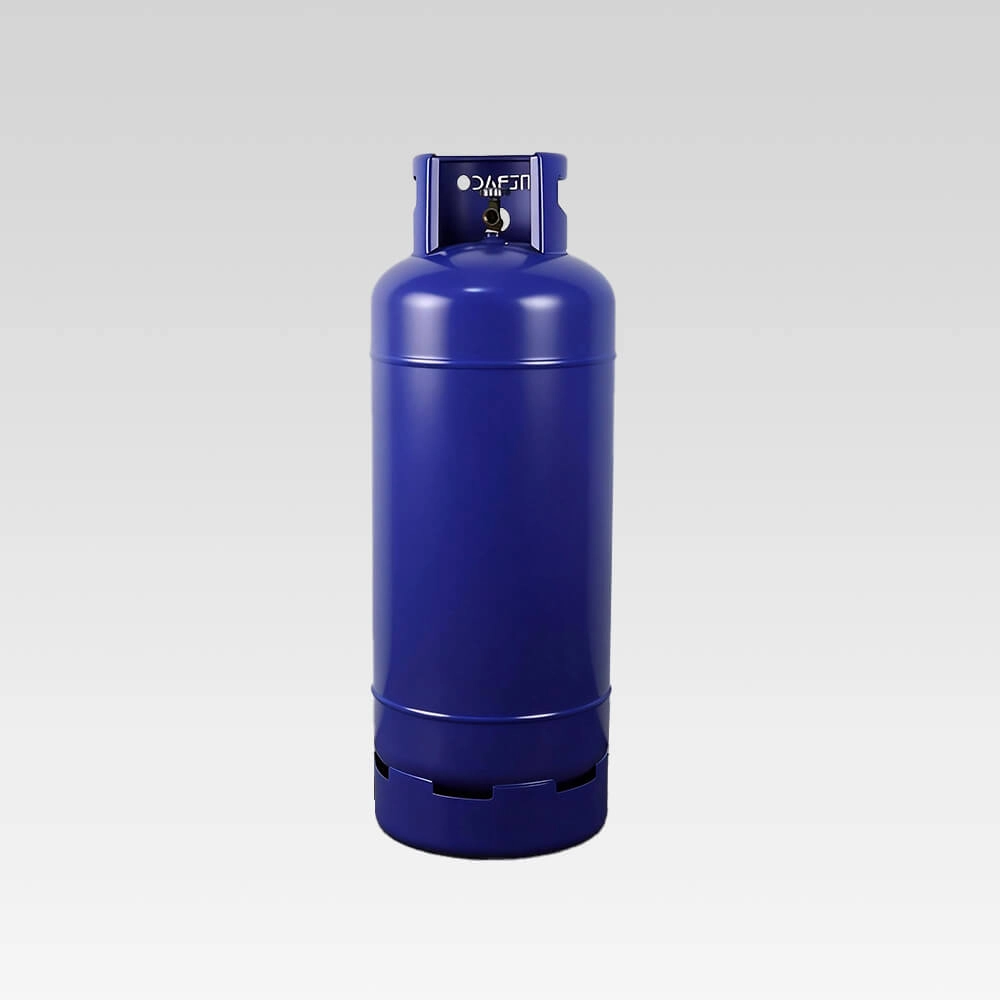
The same Mintai Cylinder product lists a working pressure of 1.8 MPa, a test pressure of 3.4 MPa, and HP295/Q235B materials. These figures help buyers compare construction and pressure data, but they do not determine the required appliance pressure or regulator flow rate.
The cylinder valve outlet must match the destination market’s filling equipment, regulator connection, and applicable rules. Buyers should also confirm required markings, protective components, surface finish, inspection documentation, and any market-specific approval process before production.
For a replacement project, provide photographs of the current valve and regulator rather than relying on a description such as “standard restaurant connection.” Similar-looking outlets may use different threads or sealing methods.
Supply continuity begins before the first cylinder is ordered. Procurement teams should monitor average consumption, peak-season demand, refill lead time, reserve inventory, and cylinder exchange procedures.
Set a reorder point that allows enough time for collection, filling, transport, and connection without consuming the emergency reserve. Keep duty, reserve, empty, and incoming cylinders clearly identified in inventory records. Staff responsible for changeover should know the approved procedure and emergency shutoff location.
Before replacing an existing cylinder model, compare the nameplate, valve, regulator, dimensions, restraints, and required standard. Site access also matters: a larger cylinder may reduce refill frequency but increase handling difficulty. WorkSafe Queensland advises that gas work in commercial kitchens should involve a licensed gas fitter and that LPG cylinders be stored outdoors in well-ventilated areas. Local requirements take precedence because permitted quantities, separation distances, and installation arrangements vary by jurisdiction.
A purchasing decision should begin with technical compatibility, followed by documentation, production consistency, packaging, and commercial terms. Price comparisons are meaningful only when suppliers quote against the same cylinder specification.
A qualified commercial LPG cylinder manufacturer should be able to clarify water capacity, dimensions, material, working and test pressure, valve configuration, markings, and the standard used for the quoted product. Buyers should request documents applicable to the destination market and identify any deviations before confirming an order.
For bulk procurement, compare the approved specification with the sample and final production requirements. Valve model, color, logo, stamping, packaging, and accessory configuration should be recorded in the purchase documentation. Information about Mintai Cylinder can help procurement teams review the company’s LPG cylinder manufacturing focus before requesting a product-specific quotation.
A useful RFQ should include:
If some details are unknown, identify them clearly and ask the supplier to confirm suitable options. This produces a more useful technical response than requesting only a “45kg LPG cylinder price.”
A 45kg LPG cylinder can support many restaurants and commercial kitchens, but correct selection depends on more than storage capacity. Peak appliance demand, vaporization, reserve supply, valve compatibility, physical dimensions, local requirements, and refill logistics should be reviewed together.
For a project-specific discussion, buyers can 联系敏泰气缸 with the destination market, required standard, current-cylinder data, valve or regulator photographs, application, target quantity, and any drawing or packaging requirements.
It depends on the appliances, simultaneous peak demand, operating hours, ambient conditions, and required reserve. A load assessment should be completed before relying on one cylinder.
Runtime depends on total daily LPG consumption. Add the expected fuel use of each appliance and compare it with the available filling mass using a conversion method accepted by the equipment or LPG supplier.
Possibly, but the cylinder’s vaporization rate, regulator capacity, pipework, and total simultaneous appliance load must all be sufficient. A qualified professional should verify the system.
Rapid LPG vaporization removes heat from the cylinder. Persistent frosting combined with low flame may indicate high withdrawal demand, low ambient temperature, low liquid level, or another system restriction.
Confirm water capacity, dimensions, tare weight, pressure ratings, material, valve outlet, destination-market standard, markings, order quantity, packaging, and required documentation.