

A smooth LPG cylinder refill process is a controlled workflow, not a quick transfer of fuel. The essential sequence is to define responsibility, receive and identify the cylinder, verify that it is eligible for filling, confirm the correct filling basis, inspect the vessel and valve, fill it with approved equipment, check quantity and leak tightness, and record the release or rejection. Each step must follow the applicable law, product standard, facility procedure, and equipment instructions. Filling should be performed only by trained and authorized personnel at an approved facility.
This guide is written for filling operators, distributors, and procurement or quality teams that need to understand the workflow and the controls around it. It does not provide a home-refill method. Consumers looking for transport, storage, and post-refill safety guidance can use Mintai’s separate article on a safe LPG gas bottle refill.
Before cylinders enter the filling area, the facility should define which models, gases, valves, filling methods, and acceptance criteria it is authorized to handle. The plan should name trained roles, approved equipment, emergency controls, inspection points, records, and the route for nonconforming cylinders. The World Liquid Gas cylinder filling guide is a useful industry reference, but it does not replace the rules that apply to a particular country or facility.
A clear plan prevents improvised decisions at the filling head. It should state who can accept a cylinder, who can override a hold, how equipment is checked, and how records are retained. Approved procedures must be available where work occurs, and material changes should trigger review.
At receipt, identify the cylinder before it joins the production flow. Read the permanent markings, model information, owner or fleet identification where applicable, and inspection or requalification status. Confirm that the cylinder belongs to a type the facility is permitted and equipped to fill. A familiar color or shape is not sufficient because similar-looking cylinders may use different valves, materials, pressure ratings, or filling limits.
Create separate physical routes for accepted cylinders, cylinders awaiting review, and rejected cylinders. Segregation protects the main line from accidental filling and makes exception handling visible. Record the rejection reason in terms an operator and supplier can act on, such as unreadable markings, overdue inspection, valve damage, fire exposure, severe corrosion, deformation, unauthorized repair, or a model outside the facility’s approved scope.
The filling basis must come from the approved cylinder specification and local procedure. Confirm the permitted LPG product, nominal filling mass, water capacity, tare weight, valve type, and any required filling limit or automatic shutoff arrangement. Do not copy a filling value from another cylinder because nominal size labels do not prove that two vessels have the same water capacity, tare weight, or allowable fill.
Pressure terms should also be kept distinct. Working pressure describes service conditions, while test and burst pressures serve different verification purposes. Mintai’s pressure terminology guide explains the procurement distinction. During filling, operators should use the approved filling procedure and mass or level controls for the specific cylinder rather than treating a pressure reading as the only indicator of quantity.
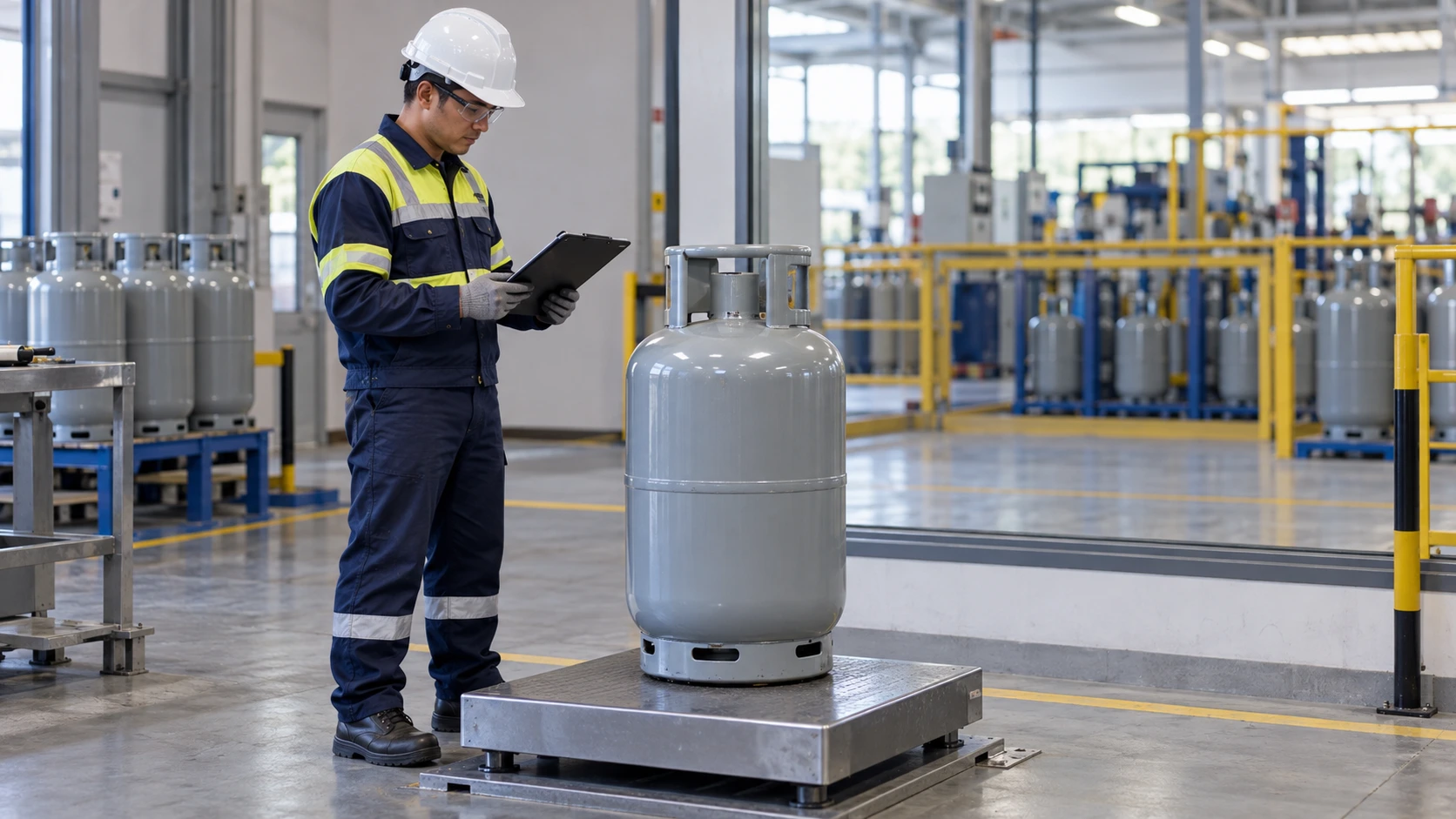
Inspect the cylinder body, foot ring, valve protection, valve, threads or connection surfaces, seals, and required markings. Look for corrosion, dents, bulges, gouges, cracks, heat or fire damage, leakage, unauthorized welding, damaged guards, unstable bases, or contamination that could affect safe handling. Apply the rejection limits in the governing procedure; a visual concern should not be waved through because the cylinder is urgently needed.
Check that the valve matches the filling connector and required protective devices are serviceable. Confirm the scale, hoses, couplings, ventilation, ignition control, and emergency equipment before work begins. Route any specialist operation to the approved station and trained personnel rather than improvising on the filling line.
The operator should remain in attendance and monitor the cylinder, connection, scale or level-control system, and surrounding area throughout filling. The Utah State Fire Marshal’s basic LP gas filling procedures provide one official example of the expectation that dispensing personnel stay with the operation until equipment is shut down and valves are secured. Facilities must follow their own applicable code and approved procedure.
Filling equipment should stop at the approved quantity, and operators should respond to abnormal weight, flow, noise, odor, frost, leakage, or equipment alarms immediately. Never defeat an automatic cutoff, add fuel to compensate for an unexplained weight difference, or continue when the cylinder identity is uncertain. Stop, isolate, and investigate. A smooth process is one in which abnormal conditions are handled predictably, not hidden to maintain throughput.
After filling, verify the final quantity using the approved method and account for the confirmed tare weight. Check valve closure, cap or plug requirements, and leak tightness with the facility’s approved detection method. Do not use a flame to search for a leak. If the filled mass or level is outside the permitted range, move the cylinder to the controlled correction process; do not release it and expect the distributor to resolve the discrepancy.
Post-fill checks should be independent enough to catch common errors such as the wrong tare value, incomplete valve closure, damaged seal, missing cap, unreadable label, or a cylinder released from the wrong batch. The procedure should define what must be repeated after any correction. A corrected weight without a renewed leak check may leave a different defect undetected.
Complete the required label, seal, batch, operator, quantity, and inspection records before the cylinder leaves the controlled area. Protect the valve during handling and load cylinders in the orientation and restraint method required by local transport rules. Release only cylinders that meet every specified check. Held or rejected units should remain clearly identified and physically separated until disposition is authorized.
Exception records are valuable operating data. Track rejection reasons by cylinder model, age, valve, supplier, customer, and filling line where lawful and practical. Repeated dimensional mismatch, unstable tare values, damaged guards, coating failure, or marking problems may indicate a purchasing or fleet-management issue rather than an isolated refill event. Sharing a precise record with the cylinder supplier makes corrective action more effective.
Speed comes from preparation and standardization. Use model-specific instructions, verified tare data, compatible connectors, calibrated scales, clear hold areas, maintenance, trained operators, and simple records. Review near misses and rejections before they become recurring delays.
Cylinder procurement supports this consistency. Mintai Cylinder publishes model-specific dimensions, materials, pressure data, and valve conditions across its LPG cylinder range. Buyers should use the confirmed production specification, not a general catalog description, to align cylinders with filling heads, scales, racks, labels, and inspection records. Repeat orders should also include change-control terms for dimensions, valves, markings, and approved materials.
A reliable LPG cylinder refill process moves every cylinder through defined acceptance, identification, inspection, filling, verification, and release controls. The workflow should stop safely when information is missing or a condition is abnormal. Trained personnel, compatible equipment, current procedures, accurate records, and a stable cylinder specification make filling both safer and more predictable.
To check whether a cylinder specification fits a planned filling and distribution system, contact Mintai Cylinder’s technical team with the model or drawing, target market, valve, filling basis, dimensions, quantity, and operating conditions.
Can an LPG cylinder be refilled at home
No home method is provided here. LPG filling should be performed only by trained and authorized personnel using approved equipment at a facility that follows the applicable rules and cylinder instructions.
Why is tare weight checked before filling
Tare weight supports the approved mass-based filling calculation and helps identify discrepancies. It must be taken from valid markings or controlled records for the specific cylinder, not estimated from a similar model.
What happens when a cylinder fails inspection
It should be identified, segregated, recorded, and routed to the approved evaluation, repair, requalification, return, or disposal process. It must not rejoin the fill line without authorized disposition.
How can procurement reduce refill delays
Specify dimensions, tare-weight tolerance, valve interface, material, pressure ratings, markings, standard, documentation, and change control. Consistent approved cylinders reduce connector, scale, rack, and inspection exceptions.