
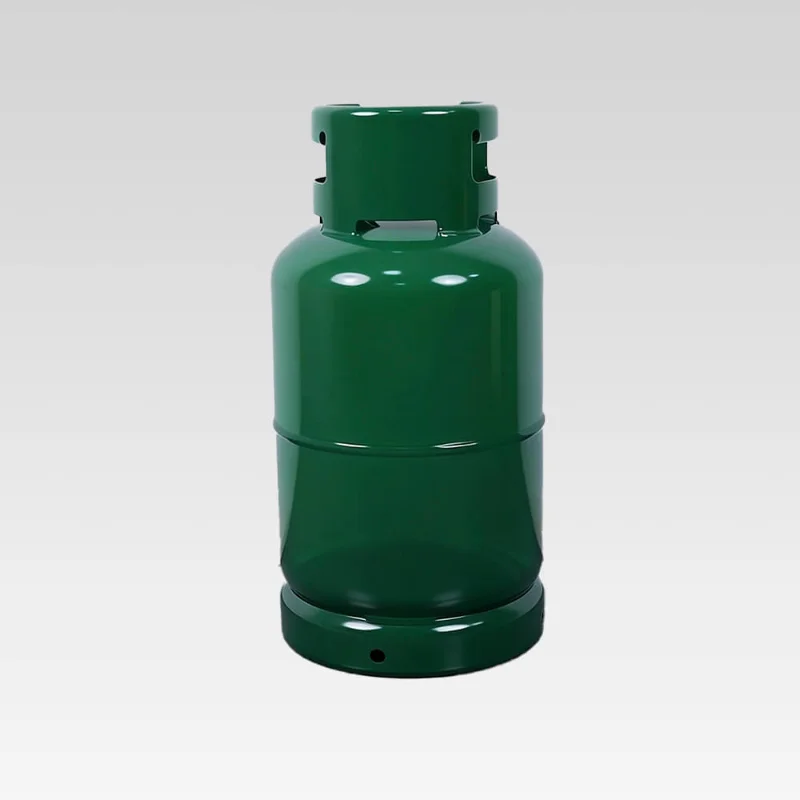
Export-grade LPG cylinders are not simply metallic cylinders with paint and valves. To an importer, gas distributor, fuel supplier, or wholesale distributor, each cylinder requires much more; it needs reliable storage, constant handling, continuous re-filling, and successful approval throughout their journey through the local system. A faulty weld, incorrect labeling, or poor test result will lead to delays whose costs will be much higher than that of the cylinder.
Mintai Cylinder specializes in LPG cylinder production for international clients, offering exportable gas cylinders, OEM order production, mass production lines, and testing facilities designed for mass production. This factor makes all the difference for B2B customers since the procurement of LPG cylinders is usually not done once but over the long term.
Each LPG cylinder designed for export should conform to the requirements and customs of its destination market. The use case of a 6kg LPG cylinder for camping and home use might differ from that of a 45kg commercial gas cylinder for use in restaurants, kitchens, and small-scale industries. Valve type, test pressure, water capacity, tare weight, coating, marking, and packaging are among factors affecting the smoothness of cargo flow.
In the case of a gas company or gas distributors, however, it is not sufficient that an export-ready LPG cylinder looks good on arrival. The more important issue is its consistency in performance throughout its journey from production to shipping, warehousing, filling, and daily usage. The cylinder will be stacked, dragged, loaded on trucks, and carried around humid warehouses or even rough yards outside.
This is what explains the importance of starting quality control before inspections. An ideal exporter of LPG cylinders would manage its whole process, from testing materials to forming, welding, pressure testing, detecting leaks, surface treatments, and packaging.
The pressure-bearing body of an LPG cylinder depends heavily on steel quality. If steel thickness, grade, or surface condition is unstable, later testing may catch defects, but the production cost and rejection risk will already rise. For bulk buyers, material stability helps keep cylinder weight, strength, and appearance within expected ranges.
Common checks before production include:
A small variation in steel thickness may look harmless on paper. In real production, however, it can affect forming behavior, weld fit, finished tare weight, and test performance. This is one of those details that experienced procurement teams usually check early.
After material preparation, the cylinder body is formed, trimmed, and welded. Welding is especially important because the weld area must handle pressure without leakage or structural weakness. Poor penetration, cracks, pores, or uneven weld beads can become serious quality risks.
Mintai Cylinder’s website highlights industry manufacturing equipment, automated production lines, and automatic girth welding equipment, which are relevant for batch consistency in LPG cylinder production. Automation alone does not replace inspection, but it helps reduce unstable manual variation when production volume is high.
Testing is where a cylinder’s design and production quality meet practical proof. Industry guidance for LPG cylinder management refers to mechanical testing, hydraulic burst testing, hydraulic pressure testing, radiographic or macro examination, documented test results, and leak detection methods. It also notes that hydraulic pressure testing should be applied to all manufactured cylinders.
| Quality Check | What It Reviews | Why It Matters for B2B Buyers |
| Material inspection | Steel grade, thickness, surface quality | Reduces early production defects |
| Weld inspection | Weld shape, penetration, visible flaws | Supports pressure safety and leak resistance |
| Hydraulic pressure test | Cylinder strength under test pressure | Helps detect leakage and deformation |
| Burst test | Safety margin of cylinder structure | Confirms design strength under extreme pressure |
| Air tightness test | Micro-leak risk after valve fitting | Supports safer filling and storage |
| Tare weight check | Finished cylinder weight | Helps filling stations manage gas quantity |
| Water capacity check | Internal volume | Supports correct LPG filling calculations |
| Marking inspection | Serial number, pressure, capacity, brand details | Helps customs, refillers, and distributors track cylinders |
Hydraulic testing is one of the core inspections for an LPG cylinder. The cylinder is filled with water and tested under pressure to check for leakage, deformation, or weak points. Water is used because it is far less compressible than gas, making the test safer than pressurizing an empty cylinder with air.
For importers, hydraulic test records are important because they show that pressure resistance was checked at the production stage.
A cylinder that passes a pressure test still needs careful leak checking, especially around welds, valve connections, and threaded areas. Even a tiny leak can become a major problem during storage or filling. Industry guidance notes that leak detection may use water bath immersion or another method with equal sensitivity.
This is a simple idea, but simple does not mean minor. In a busy filling plant, a leaking gas cylinder slows work, creates safety concerns, and may damage customer trust.
Burst testing checks how the cylinder behaves under pressure far beyond normal use. It is not a daily-use condition. It is a design and batch confidence test. Weld examination, including radiographic or macro examination where required, helps detect hidden weld problems such as lack of fusion, cracks, inclusions, and gas pores.
For a buyer comparing multiple suppliers, these tests are useful signals. Price matters. But a lower unit price loses value quickly if quality failures appear during inspection, customs review, filling, or field use.

Mintai offers a range of compact sizes including 3kg, 6kg, 9kg, 12.5kg, 15kg, and 20kg cylinders suited for domestic cooking or outdoor use such as camping or food stalls. The 9kg LPG Gas Cylinder from Mintai Cylinder meets the needs for daily cooking. It also handles outdoor activities. The cylinder has a sturdy steel structure. These smaller units are popular among distributors serving residential markets or mobile kitchens due to their portability.

For restaurants or small industries requiring higher consumption rates, Mintai’s 45kg/100lbs model provides a robust solution with carbon steel construction (108L water capacity) rated at 1.8MPa working pressure and 3.4MPa test pressure. Ideal for commercial kitchens or centralized gas supply systems where reliability is vital.
Mintai supports OEM customization covering branding logos, color coatings, valve configurations (POL/CGA/QCC/BS), packaging styles, and market-specific markings. Services designed around procurement flexibility rather than simple product variation.
Before confirming any bulk order, buyers should verify:
Such checks prevent mismatches during filling or certification stages.
Buyers should request hydraulic test reports, inspection certificates, batch traceability documents, and production logs before shipment confirmation. These records are essential for customs clearance in regulated markets.
Surface finishing affects corrosion resistance during sea freight. Processes like shot blasting followed by powder coating improve longevity in humid climates. Cylinders are palletized with protective wrapping to minimize transit damage. A detail often overlooked but critical for maintaining appearance upon arrival.
Mintai operates six automatic production lines with trained technicians capable of producing over two million cylinders annually. Capacity sufficient to support long-term B2B contracts without compromising delivery schedules.
Comprehensive testing facilities enable repeated quality verification across batches. A major advantage when importers rely on consistent results over multiple orders rather than one-time inspections.
Mintai positions itself as a reliable partner for importers, regional gas brands, wholesalers, and commercial fuel suppliers seeking export-ready LPG cylinders with OEM flexibility backed by structured logistics support.
Export-grade LPG cylinders need precise control in terms of material quality, forming, welding, pressurized tests, leak checks, surface treatments, marking, and packing. This is because for international markets, this will affect matters like safety, market access, filling effectiveness, and overall supply consistency.
Mintai Cylinder provides services in export LPG cylinders, OEM solutions, mass manufacturing capabilities, and test-oriented manufacturing of B2B gas cylinders. For suitable LPG cylinder specifications and bulk supply support, contact Mintai Cylinder for a professional quotation.
A: An export-ready LPG cylinder meets international standards on material strength, pressure testing, labeling accuracy, valve compatibility, and documentation traceability. All these aspects are verified through factory-level quality control systems like those used by Mintai Cylinder.
A: Hydraulic testing above standard working pressure is essential to verify structural strength. Air tightness tests detect micro leaks. Burst tests confirm design safety margins. Visual inspections ensure weld integrity before shipment.
A: Selection depends on usage scenario. 6kg or 9kg models suit households or camping setups. The 6kg LPG Gas Cylinder from Mintai Cylinder handles camping, outdoor activities. Larger sizes like 45kg serve restaurants or small businesses requiring continuous fuel supply.
A: Yes. OEM services cover logo printing, custom colors, valve standards (POL/CGA/QCC/BS), packaging formats, and region-specific markings. All these services are designed around importer requirements rather than generic specifications.
A: Importers should request product test certificates (hydraulic & burst), material traceability reports, production batch records, surface treatment details, packaging lists with pallet configuration data. All these documents are crucial for verifying compliance before dispatch from the supplier’s facility.