
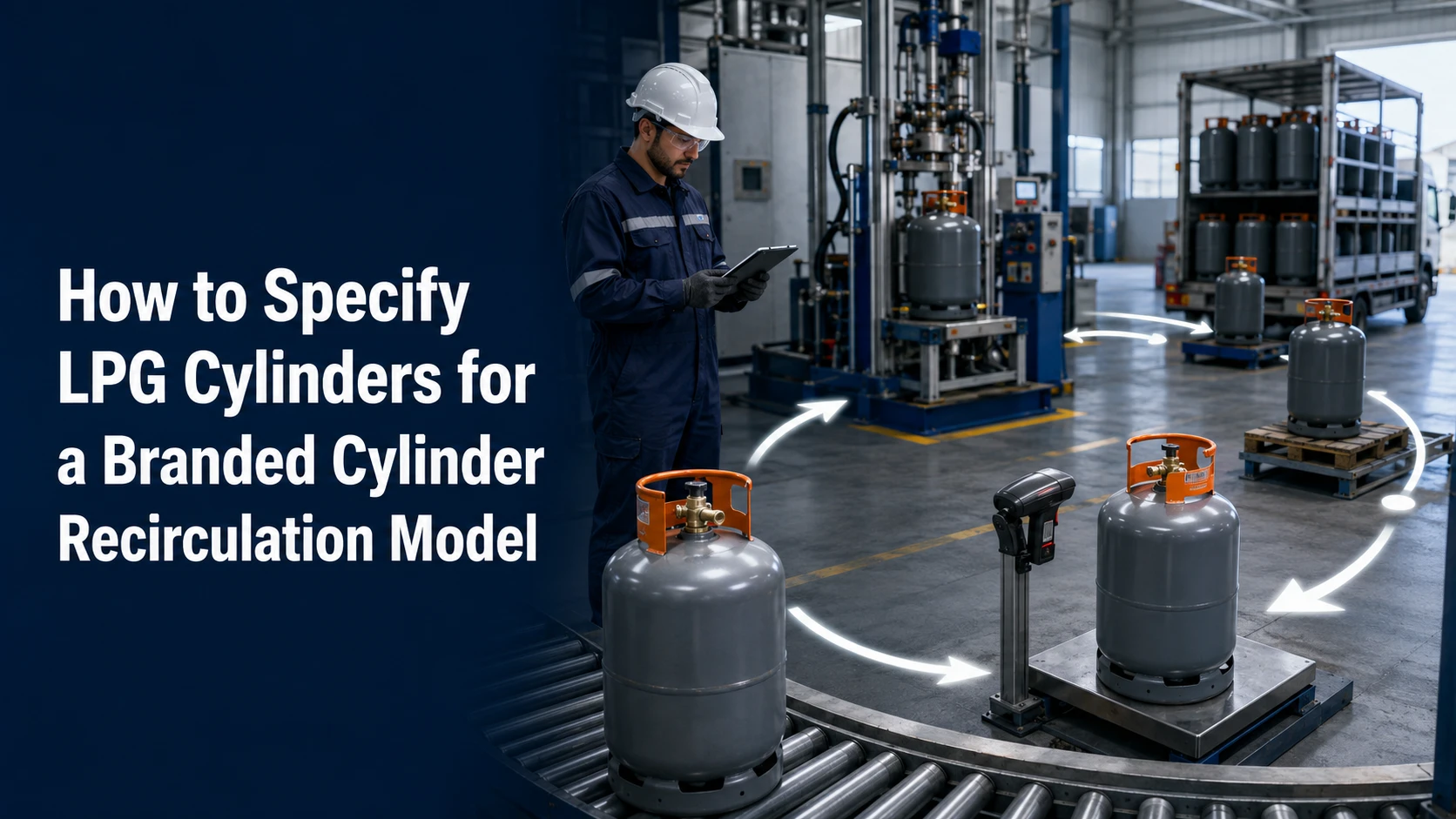
Specifying LPG cylinders for a branded cylinder recirculation model is not simply a matter of selecting a nominal LPG capacity. The cylinder must repeatedly move through filling plants, transport systems, exchange points, customer sites, inspection stations, and repair or retirement channels. A workable specification therefore connects regulatory approval, cylinder geometry, tare weight, valve interfaces, surface protection, ownership markings, traceability, and batch acceptance criteria. Buyers should first define how the cylinder fleet will operate, then verify each physical and administrative requirement against the target market and actual filling infrastructure.
A cylinder that is acceptable for individual ownership may still create operational problems in a controlled exchange fleet. The difference lies in ownership, circulation frequency, asset control, and responsibility throughout the cylinder’s service life.
Begin by documenting who owns the cylinders, who may fill them, where customers exchange empties, and which party controls inspection, repair, requalification, and disposal. Ghana’s National Petroleum Authority description of its Cylinder Recirculation Model illustrates a typical flow: cylinders are filled at bottling plants, transported to exchange depots or points, and exchanged by consumers.
The exact model may differ by country. Before issuing an RFQ, confirm the applicable cylinder regulations, approved capacity classes, filling permissions, ownership rules, and restrictions on cross-filling. A specification developed without this operating map may produce cylinders that are technically sound but incompatible with local approvals or fleet-control responsibilities.
Cylinder capacity alone does not establish compatibility. The complete assembly must work with filling heads, conveyors, scales, leak-testing stations, handling equipment, pallets, racks, and customer regulators.
For each fleet SKU, define LPG filling capacity, water capacity, outside diameter, overall height, foot-ring dimensions, valve-guard envelope, and permitted tare-weight tolerance. These values should be checked against conveyor clearances, filling scales, pallet layouts, truck loading patterns, and exchange-point storage.
A broad export LPG cylinder range can help buyers identify possible capacity classes, but the final choice should follow the program’s consumption profile and infrastructure. As one concrete reference, the 12.5 kg LPG gas cylinder page lists a 550 mm height, 310 mm outside diameter, 26.5 L water capacity, 2.1 MPa working pressure, and 3.1 MPa test pressure. Those published values are useful for initial screening, not automatic evidence of project compatibility.
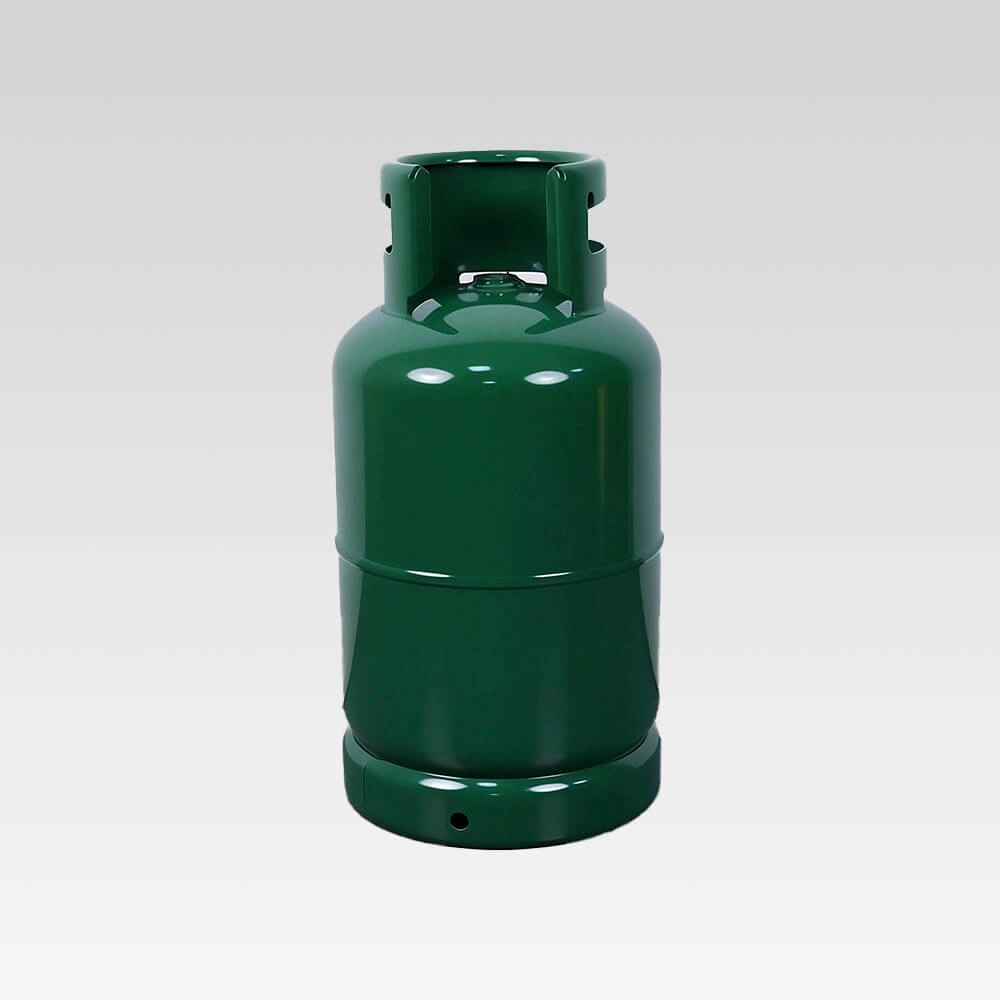
Specify the complete valve interface: valve type, inlet thread, outlet connection, sealing method, orientation, regulator compatibility, and any tamper-evident closure. Do not approve a cylinder merely because the nominal capacity matches an existing fleet.
Filling equipment can be configured for different valve arrangements. For example, MAKEEN Energy’s universal filling machine supports center and screw valve configurations, demonstrating why the actual filling head and valve design must be matched. Buyers should provide approved valve drawings, thread details, regulator samples, and filling-head information. A preproduction cylinder should then be physically tested on the intended line.
Recirculating cylinders experience repeated loading, unloading, stacking, transport vibration, outdoor storage, and contact with filling and inspection equipment. The specification must address these conditions rather than relying only on initial pressure-related requirements.
Confirm the required cylinder material and design standard, body geometry, weld arrangement, valve-guard configuration, and foot-ring stability. The guard should protect the valve while allowing access for filling and inspection. The foot ring must suit conveyors, storage surfaces, pallets, and expected handling practices.
Surface protection should reflect the operating environment. Coastal humidity, standing water, abrasive handling, chemical exposure, and outdoor storage can create different coating requirements. The RFQ should state the coating system, color, surface preparation, identification zones, and acceptance method. Avoid specifying a finish only by appearance; fleet buyers need repeatable criteria for adhesion, coverage, damage, and permitted repair.
Build the cylinder lifecycle into the procurement specification. Define inspection points at filling plants or depots, rejection conditions, authorized repair activities, requalification responsibilities, and retirement rules. Common decision areas include corrosion, dents, fire exposure, damaged guards or foot rings, valve defects, unreadable markings, and overdue requalification.
Intervals and acceptable repair methods depend on the governing jurisdiction and cylinder standard. For example, WorkSafe Victoria’s guidance explains that damaged or out-of-test cylinders cannot be refilled until the required inspection, testing, and marking have been completed. Buyers should not copy that jurisdiction’s interval into another market; they should obtain the applicable local rules and incorporate them into fleet procedures.
Branding in a recirculation model is an asset-control function, not just a color choice. Ownership identification and traceability must remain usable after repeated filling, transport, cleaning, and repainting.
Separate mandatory technical markings from commercial graphics. The specification should identify required permanent marks, ownership wording, manufacturer information, serial identification, approval references, tare weight, water capacity, inspection data, and any locally required warnings. It should also define location, character size, legibility, and areas that must remain visible after repainting.
EN 14894, for example, covers stamp marking requirements for transportable refillable LPG cylinders, while its scope notes that national or transport requirements may take precedence. The relevant SIS standard description is a useful reference, but destination-market authorities should confirm the required marking layout before artwork or tooling is frozen.
Every fleet needs a durable primary identity. A permanent serial number commonly provides that foundation, while barcodes, QR codes, or RFID tags can support faster scanning and asset records. The appropriate method depends on fleet size, scanning distance, contamination, abrasion, sunlight, database infrastructure, and the information required at filling or exchange points.
Digital identifiers should not replace mandatory permanent markings. Buyers should specify identifier placement, format, uniqueness rules, data ownership, replacement procedures, and what happens when a label or tag becomes unreadable. A simple serial-plus-barcode system may suit a controlled depot, while RFID may be justified when automatic, non-line-of-sight identification provides measurable operational value.
A drawing that appears correct does not prove that the cylinder will run through a live filling and distribution system. Compatibility should be demonstrated before volume production and rechecked during repeat orders.
Use an approval sequence that moves from specification review to drawing approval, component confirmation, preproduction sample, and operational trial. The sample should be checked for dimensions, tare weight, valve orientation, regulator connection, filling-head engagement, conveyor stability, leak-test access, pallet fit, and marking readability.
Record the approved configuration in controlled documents. If a filling line, valve, regulator, or cylinder dimension changes, determine whether another fit test is required. This process is especially important when replacing a legacy cylinder, because a small difference in guard profile, foot ring, or valve position can disrupt equipment that previously handled the nominal size correctly.
The purchase specification should state which characteristics are checked per cylinder, per sample, or per batch. Acceptance records may cover dimensions, tare weight, valve configuration, markings, coating, required pressure-related tests, and accompanying documentation, depending on the applicable product specification.
Define sampling rules, acceptance limits, treatment of nonconforming units, and required records before placing an order. Buyers should also control changes to materials, valve sources, drawings, markings, and production configuration. Without change notification and repeat-order controls, later batches may meet a general product description while no longer matching the operational fleet standard.
Cylinder procurement decisions should account for the full circulation system. A lower initial unit price can be offset by handling damage, line interruptions, premature coating repair, lost assets, inconsistent replacement batches, or administrative difficulty.
Build a lifecycle model using the purchase price, expected circulation frequency, transport and handling costs, maintenance, valve service, requalification, repainting, tracking, asset loss, and retirement value. Assumptions should be based on local operations rather than a universal service-life claim.
Compare candidates under the same scenarios. A design that costs more initially may be commercially reasonable if it reduces fleet losses or operational interruptions, but that benefit should be demonstrated with program data. The model should also test changes in return rate, damage rate, inspection cost, and cylinder utilization so procurement teams can see which assumptions drive the decision.
A qualified supplier should be able to review the destination market, controlled drawing, valve interface, marking plan, inspection requirements, and batch acceptance criteria. Procurement teams should ask how specifications are recorded, how changes are communicated, and how repeat orders are checked against the approved configuration.
กระบอกมินไท presents LPG cylinder manufacturing as its primary business and publishes several capacity options for export markets. The about Mintai Cylinder page provides additional company and production context. These resources can support initial supplier screening, while project approval should still rely on confirmed drawings, samples, regulatory documents, interface checks, and agreed inspection records. Supplier selection should be based on evidence relevant to the specific recirculation fleet—not on a generic product description.
An RFQ should give the supplier enough information to identify regulatory, manufacturing, and compatibility questions before quotation.
| RFQ field | Information to provide or confirm |
|---|---|
| Target market | Destination country, applicable regulations, standards, and approval authority |
| Operating model | Cylinder owner, authorized filler, exchange flow, inspection party, and repair responsibility |
| Capacity | LPG filling capacity, water capacity, and planned fleet SKU range |
| Geometry | Diameter, height, foot ring, valve guard, clearances, and dimensional tolerances |
| น้ำหนัก | Nominal tare weight, permitted tolerance, and weighing process |
| Pressure requirements | Working and test requirements verified against the approved specification |
| Interfaces | Valve, inlet thread, outlet, seal, regulator, filling head, and closure |
| Markings | Mandatory stamps, ownership marks, warnings, colors, and artwork |
| Traceability | Serial format, barcode, QR code, RFID, and data rules |
| Operating environment | Humidity, coastal exposure, outdoor storage, handling, and transport conditions |
| Finish | Surface preparation, coating system, color, inspection method, and repair policy |
| Acceptance | Drawing approval, sample trial, batch sampling, records, and nonconformity process |
| Commercial information | Target quantity, order schedule, packaging, delivery destination, and replacement-order plan |
LPG cylinder specifications for a recirculation model should begin with the operating system, not a catalog size. Buyers need to connect local approval requirements with filling-line geometry, valve interfaces, repeated handling, lifecycle controls, markings, traceability, and batch acceptance.
For a project-specific review, ติดต่อ Mintai Cylinder with the target market, operating model, required capacity, valve or regulator drawing, filling-line information, marking plan, sample requirements, target quantity, and delivery destination. These details allow the proposed cylinder configuration to be evaluated before commercial and production decisions are finalized.
The priority specifications are destination-market compliance, filling capacity, water capacity, dimensions, tare-weight tolerance, valve and regulator interfaces, filling-line compatibility, permanent markings, traceability, coating, and lifecycle inspection requirements. Their exact priority depends on the program’s operating model and existing infrastructure.
Provide the supplier with controlled drawings and information for the conveyor, scale, filling head, leak-testing station, and handling equipment. Then test a representative preproduction cylinder on the actual line. Nominal LPG capacity alone cannot confirm physical or valve-interface compatibility.
Not necessarily. Permanent serial identification and legally required markings remain essential. QR codes, barcodes, or RFID can improve tracking when the scanning environment, database, and fleet scale justify them. The specification should define how damaged or unreadable identifiers will be handled.
Include the target country, applicable standard, operating model, capacity, dimensions, pressure requirements, valve and regulator details, filling-line interfaces, markings, traceability method, coating environment, inspection criteria, sample approval process, quantity, delivery location, and repeat-order expectations.