
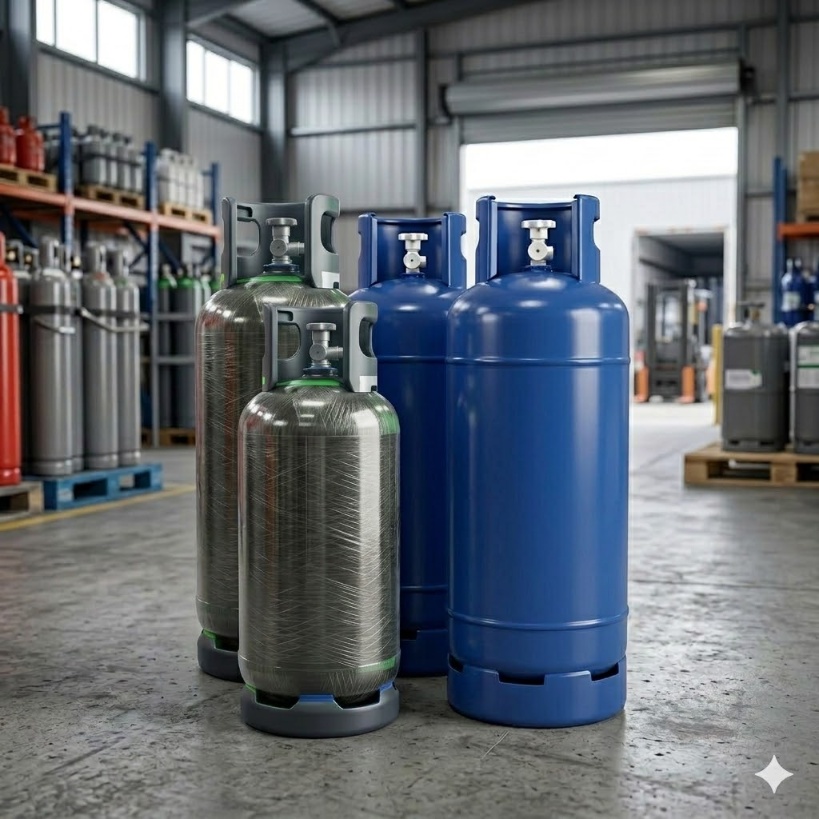
Industrial LPG purchasing has changed in 2026. Buyers are not only asking for a cheaper lpg cylinder anymore. They are comparing weight, refill cycles, certification, transport cost, cylinder life, and how well each model fits local filling stations. Composite cylinders look modern and are easier to lift. Steel cylinders are heavier, but they remain common in restaurant gas supply, LPG distribution, small factories, and bulk commercial programs because they are tough, familiar, and easier to price at scale. For bulk industrial buyers, the right choice depends less on trend and more on daily use.
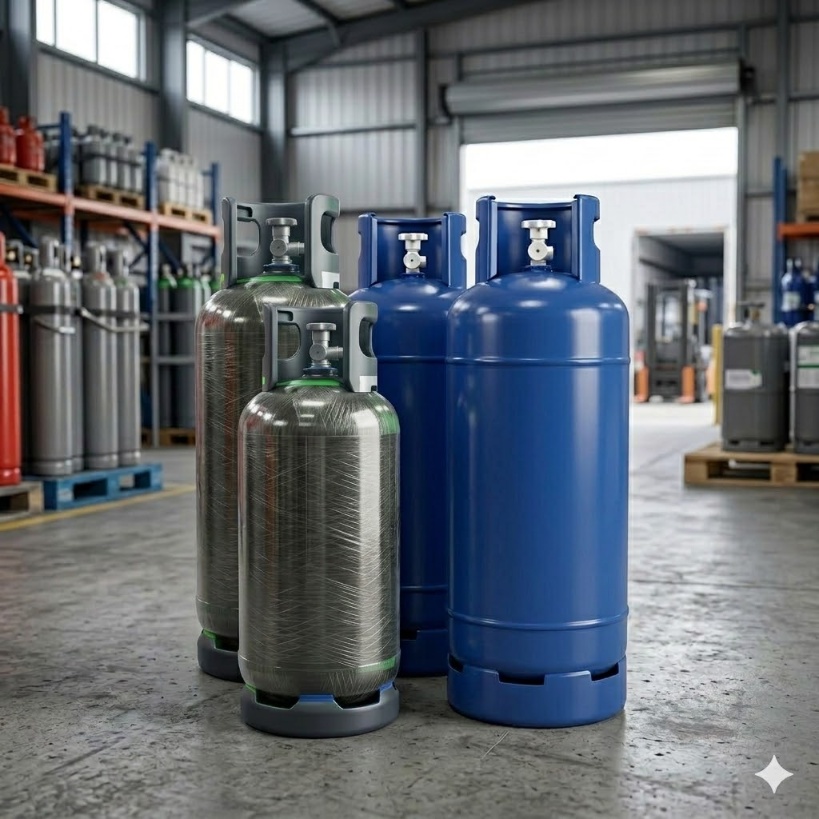
LPG stays widely used in restaurants, cafeterias, bakeries, small factories, outdoor cooking stations, and regional gas distribution networks. Many markets still find it simpler to store and move than pipeline gas.
Procurement teams focus more on total operating cost in 2026. Cylinder price counts, yet refill frequency, repair rate, inspection needs, transport damage, and user complaints also play a role.
Composite cylinders often draw interest due to their lightweight build. This brings a clear benefit. Industrial buyers still evaluate a cylinder using a broader range of points. These cover pressure performance, local approval, refill-station acceptance, handling strength, and long-term supply stability.
A steel cylinder may weigh more. Yet it stays familiar to filling stations, distributors, and end users in many regions. Such familiarity helps cut training costs and simplifies fleet management.
Steel cylinders are built to take repeated refills and rough handling. Trucks, pallets, storage racks—they survive all of it. Welds, valves, and coating matter, but a good steel cylinder lasts. Industrial buyers tend to pick them because they can handle wear and tear that would challenge some composites.
For large orders, steel usually costs less. That’s clear when comparing container shipments or warehouse restocking. Lower upfront cost plus proven durability often wins over the lighter composite cylinder in bulk procurement.
Steel cylinders have mature certifications. Filling stations know how to handle them. Inspectors know what to check. That makes approvals smoother. For industrial buyers, fewer surprises in daily operations matter more than weight or looks.
Composite cylinders are light. They work well for portable setups, marine use, camping, and household applications. They reduce carrying effort and may feel safer for small-scale operations.
Composite cylinders don’t rust. That’s a plus in humid or coastal areas. Steel needs coating and some care, while composite handles weather better. Still, in industrial operations, corrosion alone rarely outweighs cost and handling considerations.
Composite cylinders cost more upfront. Industrial filling stations and bulk operations may prefer steel. Composite may need extra checks, special valves, or staff training. For large fleets, these factors matter more than small consumer conveniences.
| Comparison Factor | Steel LPG Cylinder | Composite LPG Cylinder | B2B Buying Note |
| Initial cost | Usually lower | Usually higher | Steel often fits bulk procurement budgets better |
| Weight | Heavier | Lighter | Composite is easier to carry and deliver |
| Durability | Strong under rough handling | Good, but structure differs | Steel is trusted in tough distribution environments |
| Corrosion resistance | Needs coating protection | Strong corrosion resistance | Composite performs well in humid conditions |
| Market acceptance | Very mature | Growing, but varies by region | Steel may face fewer refill-station barriers |
| Fleet replacement | Simple and familiar | May need different planning | Standard steel fleets are easier to manage |
| Industrial fit | Strong for high-volume use | Better for lightweight-focused markets | Application decides the better choice |
Large distributors run heavy schedules: fill, load, ship, deliver, return, refill. Steel handles this well. Composite may survive, but steel feels safer for bulk cycles.
Fewer cylinder types simplify inventory, valve matching, inspections, and customer service. Standardized steel fleets reduce confusion and training time.
Steel cylinders make sense in cost-sensitive regions. Distributors in Africa, Latin America, or Southeast Asia often pick steel because of price, durability, and local familiarity.
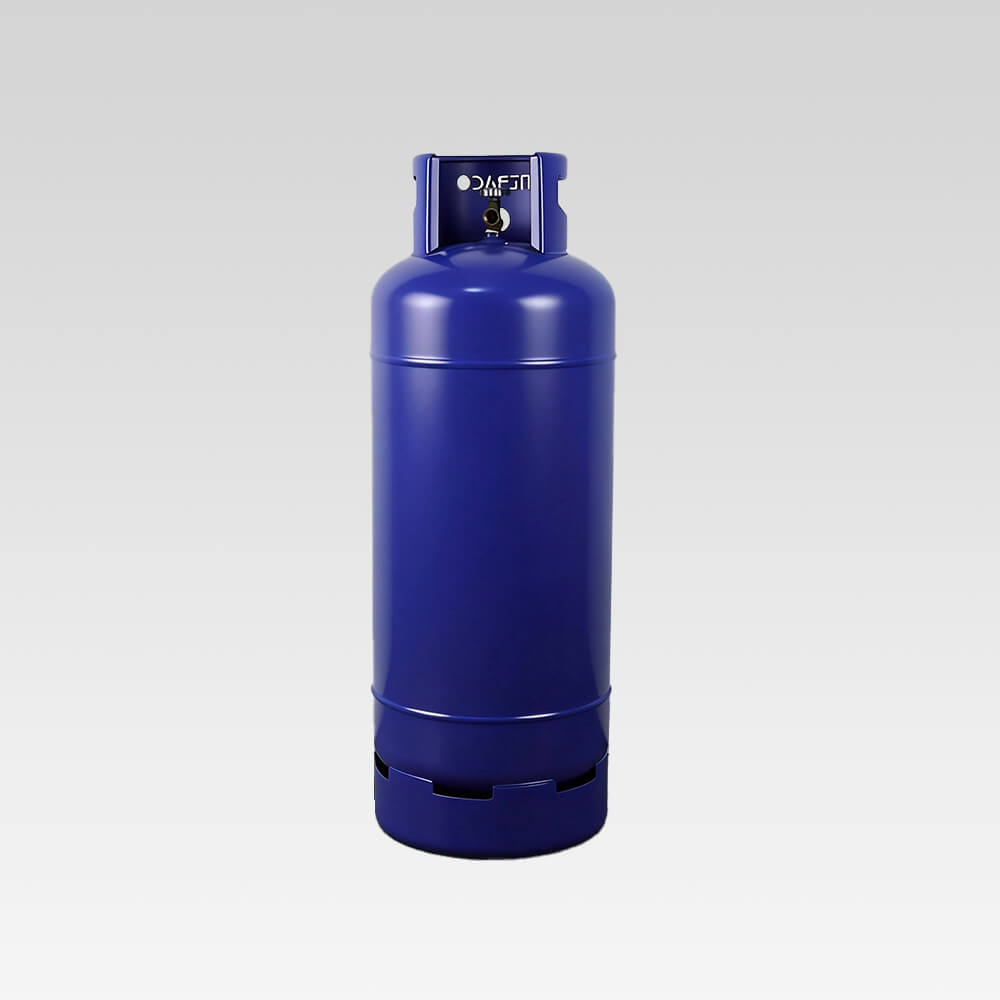
Mintai Cylinder’s 45kg/100lbs LPG gas cylinder can be used as a practical product example for commercial and light industrial applications. It is relevant for restaurants, cafeterias, outdoor cooking, small businesses, and gas distribution channels.
Key product data includes:
For B2B buyers, these figures help compare the product beyond appearance. Water capacity, working pressure, test pressure, and steel material all connect directly to application planning.
Material selection affects cylinder strength, weld performance, and service behavior. HP295 and Q235B steel materials give procurement teams clearer reference points when comparing a steel cylinder with a composite cylinder.
Pressure performance also matters. Working pressure shows normal service design, while test pressure shows the higher inspection pressure applied during quality checks. These figures are not decorative. They help buyers judge whether the cylinder fits commercial-use conditions.
B2B orders frequently need more than a standard cylinder body. Teams must confirm valve type, color, branding, packing method, and destination-market requirements before production begins.
A steel LPG cylinder for one country may need a different valve or marking style for another market. Importers who supply multiple regions see this situation often.
A steel cylinder usually fits better when the business model relies on bulk distribution. It also works well for restaurant gas supply, light industrial fuel use, or cost-sensitive commercial markets. The same cylinder suits cases where local filling stations already hold strong experience with steel cylinder systems.
A composite cylinder may serve as the better option when lightweight handling forms the main requirement. Household convenience, camping, RV use, marine use, and premium portable gas markets often place more value on lower weight than on the lowest initial purchase cost.
No single option wins for every application. It will depend on the refilling capabilities, transportation conditions, user behavior patterns, climate, costs, and local safety regulations.
In industrial uses, the overall economics rather than the purchase price must be considered.
Before placing a bulk order, procurement teams should check:
This checklist can prevent a lot of trouble. A cylinder that looks fine in photos may still fail to match the local market if the valve, marking, or certification is wrong.
Steel and composite LPG cylinders both show real advantages in 2026. Composite cylinders weigh less and resist corrosion. They work well for portable or premium consumer markets. Steel LPG cylinders stay very useful for industrial bulk buyers. They provide durability, familiar handling, wide refill compatibility, and better cost control on large orders.
Mintai Cylinder provides refillable steel LPG cylinder options for commercial, household, and light industrial gas supply. For distributors, commercial kitchen suppliers, and industrial buyers comparing steel cylinder and composite cylinder options, Mintai Cylinder can support model selection, valve matching, customization, and bulk order planning for target-market needs.
Q1: Are steel LPG cylinders better than composite LPG cylinders for industrial buyers?
A: Steel LPG cylinders are often better for industrial buyers who prioritize durability, lower initial cost, broad market acceptance, and refill-station compatibility. Composite LPG cylinders may be better when lightweight handling is the main requirement.
Q2: Why are composite LPG cylinders lighter than steel cylinders?
A: A composite cylinder usually uses an inner liner with fiber wrapping and an outer casing. This structure reduces weight compared with a traditional welded steel cylinder.
Q3: Are steel cylinders still widely used in 2026?
A: Yes. Steel cylinders are still widely used in restaurants, gas distribution networks, commercial kitchens, and industrial gas supply because of mature standards, strong structure, and cost advantages.
Q4: What should bulk buyers check before ordering a steel cylinder?
A: Material, working and test pressure, water capacity, valve type, coating, certification, inspection, MOQ, and packaging.
Q5: How does Mintai Cylinder support B2B LPG cylinder procurement?
A: Mintai Cylinder provides refillable steel LPG cylinder products for commercial, household, and light industrial use, with product specifications, pressure data, quality-control testing, and customization support for different market needs.