

A quotation can look complete while leaving key quality items unclear. In bulk LPG cylinder sourcing, the lowest unit price may seem attractive at first glance, but it rarely shows the full purchasing picture. Material choice, weld control, pressure testing, export packing, markings, inspection records, and supplier response all affect the real cost of an order.
For importers, gas distributors, commercial fuel suppliers, and industrial buyers, supplier selection is both a price decision and a risk-control task. In bulk orders, small issues such as paint damage, missing documents, unclear markings, or inconsistent batch quality can quickly create extra cost.
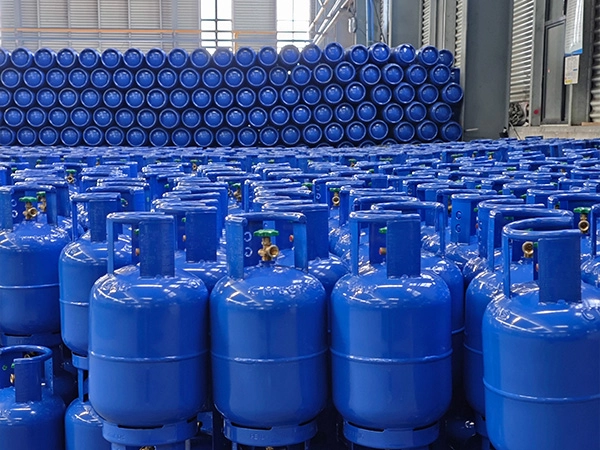
Two LPG gas cylinder quotations may show the same capacity and similar trade terms, but the actual offer may be very different. One quote may include batch inspection photos, packing confirmation, OEM marking support, and test records. Another may only include a basic cylinder price.
Common hidden costs include:
A low price still has value, but only when the buyer knows what is included. A quote without product details is not a real comparison point. It is not enough for supplier evaluation.
LPG cylinders are safety-related products used in homes, restaurants, refill stations, outdoor cooking, and light industrial fuel supply. A small production difference can affect daily handling, storage, filling, and transport.
That is why procurement teams should compare the product, factory process, documentation, and supplier order-handling ability together. The right gas cylinder supplier should reduce uncertainty before mass production starts.
A strong RFQ makes supplier comparison easier. Before asking for price, procurement teams should define the application clearly. A cylinder for home cooking may not need the same configuration as a cylinder for a restaurant chain, gas distributor, or light industrial fuel user.
Instead of comparing only catalog models, buyers should connect the application to purchasing requirements:
| Buying Scenario | What to Confirm |
| Household distribution | Size range, coating durability, user-friendly handling, local markings |
| Restaurant and catering supply | Stable batch quality, refill cycle, packing strength, delivery schedule |
| Коммерческое газоснабжение | Larger-capacity models, inspection records, pallet or container loading plan |
| OEM or private-label projects | Logo, color, marking layout, documentation, repeat-order consistency |
This keeps supplier comparison focused on order risk, not only product selection.
The RFQ should include enough detail to avoid vague pricing. A practical request usually covers:
Valve selection should be confirmed in the RFQ, but it does not need to dominate this supplier comparison. For detailed valve matching, buyers can use an internal link to the dedicated guide on LPG cylinder valve types, market compatibility, and regulator fit.
The cylinder body carries pressure, so material information deserves close review. Buyers should check the listed steel material, wall consistency, forming quality, and whether the supplier can provide product specifications before mass production.
Цилиндр Минтай product pages list HP295/Q235B material options for selected LPG gas cylinder models. Rather than comparing only nominal size, procurement teams should check whether the quoted cylinder matches the required pressure data, destination market, and actual use case.
In real distribution work, cylinders may be stacked, dragged, loaded into trucks, stored outdoors, and handled by many people. Body construction and material consistency affect how the product performs through that cycle.
Welding is one of the first areas to check when comparing an LPG cylinder supplier. A clean painted surface can hide weak process control, so buyers should look beyond appearance.
Mintai Cylinder’s production information includes circumferential welding, heat treatment, shot blasting, powder painting, and air leakage testing. These steps show that cylinder quality depends on a controlled production chain, not only a final visual check.
Sample approval is useful, but it is not enough. The key question is whether the supplier can keep the same quality level across the full batch, especially for repeat orders.
Testing should be part of the supplier comparison, not an afterthought. Mintai Cylinder’s quality-control information includes hydraulic testing, tightness testing, bursting testing, mechanical testing, X-ray inspection, water volume testing, air tightness testing, and appearance inspection.
For bulk buyers, the key point is traceability. Test records should be linked to the shipment batch whenever possible, because missing paperwork can slow customs clearance, customer acceptance, or local inspection.
| Checkpoint | Why It Matters | What to Request |
| Material information | Confirms basic cylinder construction | Material grade and specification sheet |
| Hydraulic test | Checks pressure resistance | Test record or batch test summary |
| Испытание на герметичность | Helps reduce leakage risk | Inspection method and result record |
| Appearance check | Catches dents, paint flaws, and visible defects | Pre-shipment photos |
| Marking check | Supports traceability and resale | Marking sample or batch photo |
| Packing check | Reduces transport damage | Packing details and loading photos |
These records are basic purchasing controls. They also make claims easier to handle if a problem appears after delivery.
Product specifications are important, but they should not be the only basis for choosing an LPG cylinder supplier. A model with suitable pressure data and capacity still needs stable production, correct documents, reliable packing, and clear communication before shipment.
Buyers can use product pages as technical references while keeping this guide focused on supplier comparison. The key procurement question is not only “Which cylinder size is right?” but also “Can the supplier deliver this size with stable quality, proper documents, and repeat-order consistency?”
A practical product comparison should look at:
This approach helps buyers avoid choosing a product that looks right on paper but creates extra work during inspection, distribution, or reordering.
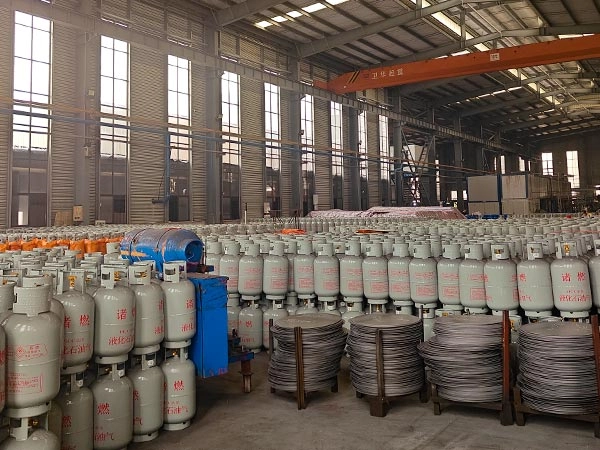
Factory capacity matters when orders are repeated, seasonal, or mixed by size. Mintai Cylinder’s production base covers 35,000 square meters, with six automated production lines and annual output of around two million cylinders.
For B2B buyers, this gives a reference point for order planning. Capacity alone does not replace inspection, but it helps buyers judge whether the supplier can support repeat orders, container scheduling, and larger procurement plans.
Many LPG cylinder buyers require customized color, logo, marking, valve configuration, and packing. OEM details should be confirmed in writing before production.
Export communication is another practical test. Production updates, inspection photos, packing confirmation, loading pictures, and shipping document support can prevent many avoidable problems. Slow or unclear replies may increase order risk, especially when the shipment has a fixed delivery window.
A simple scorecard can make internal purchasing decisions clearer. Each supplier can be scored from 1 to 5. Any item below 3 should require additional documents, samples, or written confirmation.
| Evaluation Item | Key Question |
| Product specification | Does the quote match required size, material, pressure, and market needs? |
| Quality control | Are testing steps and inspection records clearly available? |
| Batch consistency | Can the supplier maintain quality beyond the approved sample? |
| OEM support | Are color, logo, marking, and packing confirmed before production? |
| Export readiness | Are documents, packing, and loading handled properly? |
| After-sales response | Is there a clear process for defects, claims, or repeat-order changes? |
This scorecard prevents a common sourcing mistake: choosing the cheapest supplier while ignoring missing responsibilities.
Mintai Cylinder’s product range, production scale, and testing process give procurement teams practical reference points during supplier comparison. For overseas buyers, the decision is rarely based on one sample. It depends on stable specifications, batch-level consistency, OEM support, export packing, and clear communication during production and shipment.
For buyers comparing an LPG cylinder supplier beyond unit price, Mintai Cylinder can support product selection, OEM requirements, quality documentation, and export order communication. The value is not only in the cylinder itself, but in reducing uncertainty before and after shipment.
Comparing an LPG cylinder supplier beyond unit price means looking at the full purchasing picture. Material, weld control, pressure testing, documentation, product fit, packing, capacity, and after-sales response all influence the real value of a bulk order.
A low quote may still be worth considering, but only when product details, supplier responsibilities, and inspection records are clear. Mintai Cylinder provides LPG gas cylinder options, OEM support, and manufacturing capacity for B2B projects. Procurement teams can свяжитесь с Минтай Цилиндром with required cylinder size, quantity, destination market, and customization needs to receive a more accurate sourcing proposal.
Q1: What should an RFQ include for bulk LPG cylinder purchasing?
A: Include size, quantity, destination market, material, pressure data, markings, packing, inspection records, and delivery schedule.
Q2: How can buyers compare LPG gas cylinder quotations fairly?
A: Compare material, testing records, OEM details, packing, delivery time, export documents, and after-sales response, not only unit price.
Q3: What documents should buyers request before shipment?
A: Request specifications, material details, pressure test records, inspection photos, marking confirmation, packing details, loading photos, and shipping documents.
Q4: How should valve requirements be handled in a supplier comparison?
A: Include valve type in the RFQ, then confirm drawings, regulator fit, and local filling requirements before production.
Q5: How can importers reduce risk with repeat orders?
A: Check production capacity, batch consistency, test records, OEM support, export packing, communication speed, and after-sales handling.