
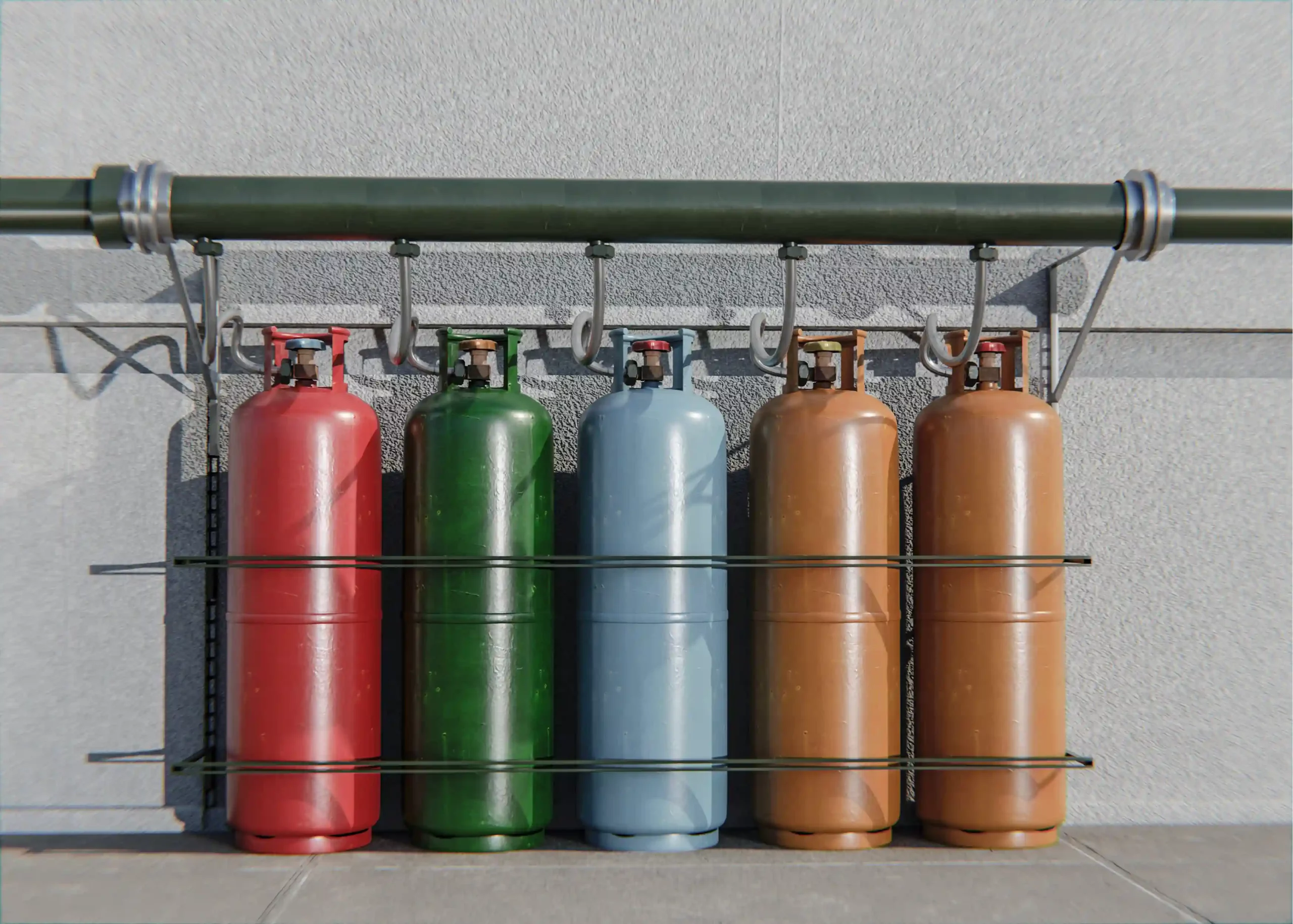
The worldwide move to Liquefied Petroleum Gas (LPG) as a clean fuel option has turned the LPG gas cylinder into a common item in many homes and companies. But the performance of LPG depends fully on safe storage methods and wise buying plans. B2B buyers, from African hotel chains to South American building companies, must manage the total cost of ownership by matching safety rules with clever large-order strategies.
This guide explores storage dangers in operations, the strong points of Mintai Cylinder, and the financial factors that shape market costs.
Wrong storage of LPG gas cylinders causes major safety problems that may result in severe outcomes. Cylinders face direct sunlight or outside heat, so internal pressure climbs to risky levels.
Explosion and Fire Risks: Too much heat causes pressure to build up. A Mintai Cylinder’s 12.5kg LPG gas cylinder uses strong HP295 steel to manage a test pressure of 3.1 MPa, but going beyond heat limits can cause breakdown.
Leaks and Toxicity: Broken valves or old seals allow gas to escape, which poses danger if gas meets fire or sparks.
Operational Disruptions: Physical risks aside, broken or lost cylinders stop work lines, slow shipments, and cause costly rule-based closures.
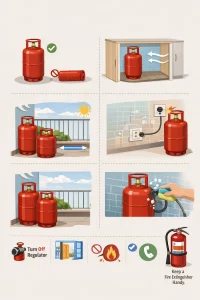
Mintai Cylinder supplies various approved products built to cut storage dangers with better design:
Durable Construction: HP295 or Q235B carbon steel makes the cylinder body resist hits and rough use in transport across growing markets.
Rigorous Testing: Each piece faces tough pressure checks—34 bar for 6kg models and 3.1 MPa for 12.5kg models—to prove steady quality in big orders.
Customized Protection: Mintai Cylinder offers gas cylinder cabinets made with fire-proof materials and built-in air flow to release any escaped gases safely.
The spot for your LPG gas cylinder storage serves as the main shield.
Ventilation and Location: The space needs to stay dry and have good air flow. LPG weighs more than air, so cylinders must never go in basements or tight pits where gas pools.
Separation from Hazards: Cylinders stay far from fire starters like power boxes, open fires, or bright sun.
Organization and Labeling: Keep full cylinders and empty ones apart to prevent mix-ups in crises. Store cylinders standing up so the safety relief valve works properly.
B2B buyers see “price” as more than the first offer. Knowing the cost of parts aids in getting better large deals.
Raw Material Costs: Steel price (HP295/Q235B) drives the main cost. Mintai Cylinder uses factory-direct sales to give fair wholesale prices by skipping brokers.
Logistics Optimization: Transport fees change with weight and size. Mintai Cylinder adjusts designs—like the 14.4L 6kg model—to improve container fill rates, which cuts freight cost per unit a lot.
Taxes and Compliance: Import fees and costs to meet world standards (like ISO 4706 or EN1442) add to the price for sure quality.
Global Trends: LPG prices shift with oil changes and demand by season.
Contract Stability: Quick “spot” buys expose buyers to cost jumps. Long deals with a solid supplier lock in steady delivery—usually 35 days for normal orders at Mintai Cylinder.
Smart buying goes beyond shipment arrival. Team handling of LPG gas cylinder stock impacts profits and safety directly.
Use Specialized Equipment: Hand-moving cylinders, mainly the 12.5kg LPG gas cylinder, raises the chances of falls and valve harm. Gas cylinder trolleys or carts with lock chains prove key for safe shifts.
Vehicle Transport Safety: Cylinders travel to users or sellers upright and fixed. Free cylinders in vehicles turn into hazards or get body damage that causes later leaks.
Pre-Use Inspections: Staff training covers checks for rust, bends, or valve issues before regulator links. HP295 steel holds up well, but extreme rough use over service years can weaken it.
Full buying plans cover needed add-ons for safe cylinder use:
Quality Regulators and Hoses: Match cylinders with approved pressure regulators and LPG-safe hoses.
Customized Valves: Market needs (Africa, SE Asia, or Latin America) call for valve types like POL, CGA, or BS. Mintai Cylinder fits these changes for local fit.
Heating Jackets: Cold areas drop gas pressure and cut burn efficiency. Custom heating jackets keep pressure even for steady work.
B2B importers often pick suppliers based on the lowest unit cost alone. Low prices signal cuts in steel grade, weld care, or safety checks.
Long-Term Durability: Mintai Cylinder lasts for the full service time. Fewer swaps over 10 years mean lower Total Cost of Ownership than cheap, thin-wall options that corrode or break early.
Reduced Liability: Top safe LPG cylinders lower accident chances that bring high legal costs, site harm, and deaths.
Reliable Lead Times: Factory ties like Mintai Cylinder prevent empty stock in high-demand times.
B2B buyers in new areas find the 6kg LPG Cylinder best for end delivery due to its small size and good load in 40ft HQ containers. For home or business use, the 12.5kg LPG Cylinder gives the top mix of size and world safety rules.
Focus on safety, specs, and firm ties with Mintai Cylinder builds a strong fuel operation that brings value and protection to clients.
A: Store LPG gas cylinders upright in a space with good air flow, far from heat or fires. Add alert signs and fix them with stands or racks.
A: Pick approved cylinders with solid valves from Mintai Cylinder. Check often for rust or valve wear and keep in air-flow cabinets.
A: Yes. Indoor types need fire-proof build, while outdoor ones handle weather and give enough air flow. Mintai Cylinder supplies both with fit features.
A: Yes. Mintai Cylinder focuses on custom cabinets, racks, heating jackets, and add-ons for exact needs.
A: Meet country fire rules and OSHA-style standards. Use approved gear from Mintai Cylinder and plan checks for ongoing fit.