

In LPG cylinder sourcing, appearance and basic specifications rarely determine success. What actually decides whether products move across borders is certification.
DOT and EN 1442 represent two different regulatory systems that control how LPG cylinders are designed, tested, and approved for international markets. One focuses heavily on transport safety compliance, while the other is built around engineering-based manufacturing standards.
In real industrial supply chains, these standards are not handled as isolated certification steps. They depend heavily on whether the manufacturer has stable engineering control, repeatable production systems, and export-ready documentation processes.
মিনতাই সিলিন্ডার operates under this type of manufacturing structure, with a 35,000㎡ production base in Hangzhou, automated production lines, and an annual capacity of around 2 million LPG cylinders. The product range covers 3kg to 45kg/100lbs models used in household, commercial, and distribution markets, where consistent compliance across batches is a key requirement for importers.
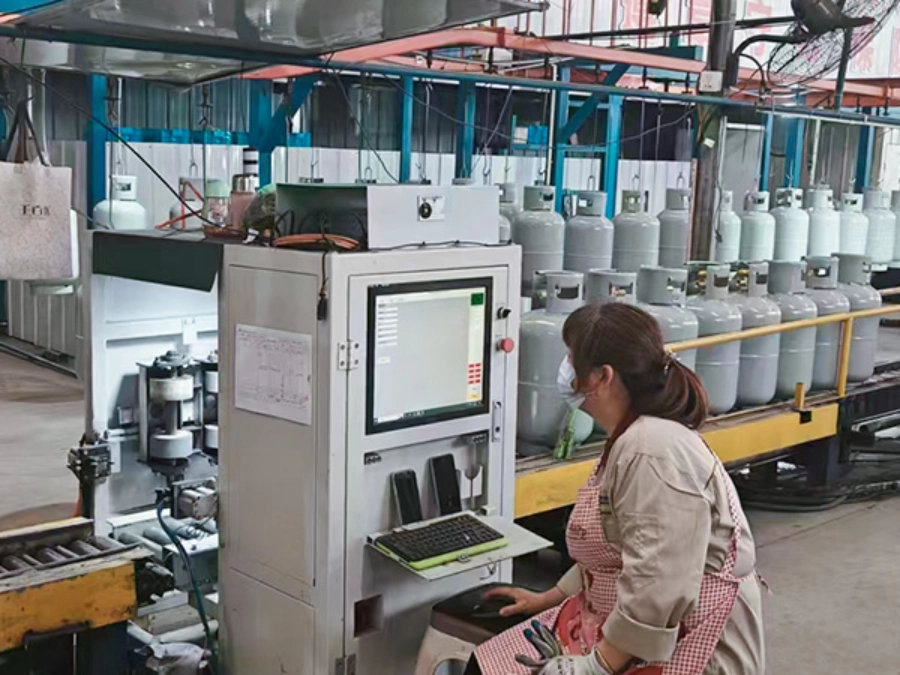
DOT standards are widely used in the United States for pressure vessels involved in gas storage and transportation. The system is highly regulatory and documentation-intensive.
Key characteristics include:
In practical manufacturing scenarios, even small deviations in marking format or serial positioning may affect compliance outcomes. This is why DOT production is often separated from general export batches.
EN 1442 is a European standard for welded refillable LPG cylinders. Compared with DOT, it is more technically structured and design-oriented.
Core features include:
In factory operations, EN 1442 compliance tends to emphasize production stability over transport classification rules.
Certification is not a single checkpoint. It is a full system that covers design, materials, testing, and documentation control. Mintai Cylinder integrates OEM customization and export-grade testing control within its certification workflow, ensuring consistency between approved samples and mass production batches.
Before production starts, cylinder design must pass engineering validation. This step determines whether the product can even enter certification review.
Key factors include:
In real procurement projects, design changes after sample testing are not unusual. Some buyers request adjustments after evaluating stacking performance or transport durability.
Material control is one of the most critical foundations of certification approval.
| Area | DOT Focus | EN 1442 Focus |
| Steel material | Batch traceability required | Grade consistency control |
| Welding process | Certified procedures mandatory | Structural uniformity priority |
| Production system | Regulatory checkpoints | Integrated quality monitoring |
Manufacturers like মিনতাই সিলিন্ডার typically operate parallel production control systems to manage different certification requirements without interrupting export schedules.
Hydrostatic testing is required under both DOT and EN 1442 systems. However, real compliance issues often come not from test failure, but from incomplete lifecycle records.
Key control points include:
In export practice, missing traceability records can delay customs clearance even when physical performance is fully qualified.
Certification is not based on factory inspection alone. Third-party bodies play a critical role in approval decisions.
Typical workflow includes:
A common issue in international trade is “paper mismatch”—products pass physical testing but fail due to incomplete or inconsistent documentation.
Certification directly determines whether a product can enter a market. Even technically qualified cylinders may face barriers if documentation or standards are not aligned.
DOT and EN 1442 operate in different regulatory environments:
Because of this, one certification does not automatically replace another. Export planning must consider target markets from the beginning.
Importers often assume certification guarantees entry, but in practice, verification is still required at multiple levels.
Key checks include:
Even minor mismatches can trigger customs delays or additional inspections.
In practical situations within the supply chain, the issue of paperwork is very likely to contribute to a delay. Even if products are technically up to the mark, they may get delayed at the custom because of improper documentation.
Such situations occur particularly during peak shipment times.
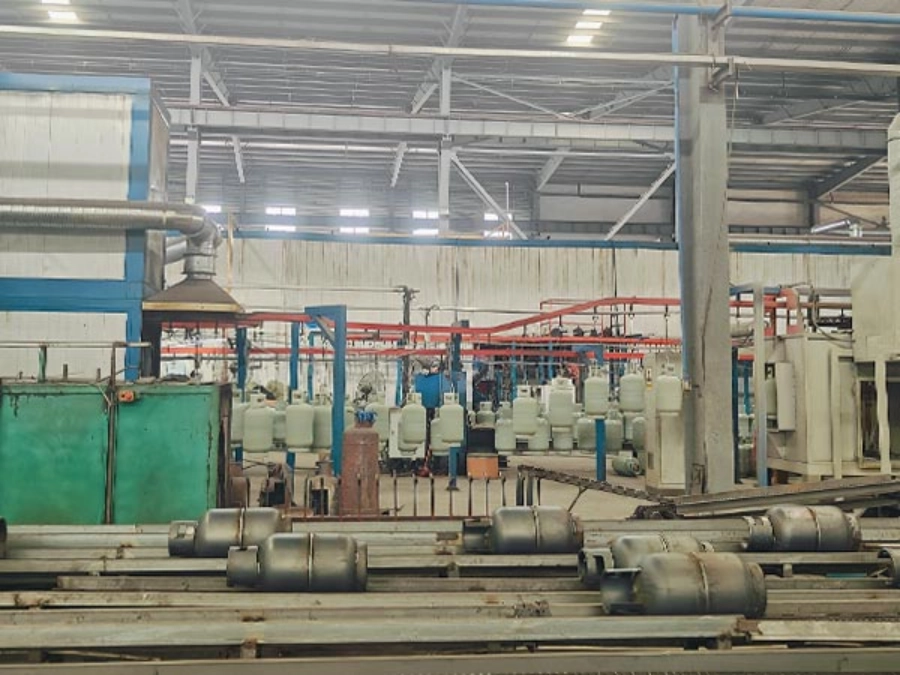
Certification success is not only about design. Manufacturing consistency plays a much larger role than most buyers expect.
Regulatory bodies often evaluate whether production processes are stable and repeatable. In large-scale LPG cylinder procurement, consistency across batches is more critical than sample-level compliance.
With automated production systems, strict batch traceability, and export-focused quality control, Mintai Cylinder supports stable compliance for DOT and EN 1442 LPG cylinder supply chains.
Even if design meets technical requirements, issues such as:
can lead to audit delays or rejection.
In many cases, production stability has a greater impact on approval outcomes than product design itself.
Manufacturers capable of handling both DOT and EN 1442 systems gain significant export advantages.
Benefits include:
At মিনতাই সিলিন্ডার, different certification systems are managed through structured production separation:
This approach improves predictability in cross-market shipments and reduces regulatory friction.
ESG considerations are becoming part of procurement decisions in many global markets, especially in industrial gas supply chains.
LPG cylinders are designed for long-term reuse. Over their lifecycle, they undergo multiple filling, inspection, and requalification cycles, significantly reducing material waste.
Steel production remains energy-intensive. As a result, manufacturers are increasingly focused on:
At the end of service life, cylinders enter controlled recycling processes. Steel components can be recovered and reused, supporting circular material flow in industrial systems.
In international procurement, ESG is no longer optional. Buyers often evaluate suppliers based on:
Certification systems like DOT and EN 1442 indirectly support ESG goals by enforcing structured lifecycle control.
DOT and EN 1442 represent two different regulatory philosophies, but both serve the same purpose: controlling safety, consistency, and reliability in global LPG cylinder trade.
For importers, the real challenge is not choosing between standards, but ensuring suppliers can operate across both systems without disruption in production or documentation.
Manufacturers like মিনতাই সিলিন্ডার integrate multi-standard compliance into production systems, helping reduce regulatory friction and support stable global supply chains.
For procurement teams evaluating certified LPG cylinder suppliers, working with a manufacturer that understands both DOT and EN 1442 requirements is often the key difference between smooth clearance and repeated delays.
Q1: What is the main difference between DOT and EN 1442 LPG cylinder standards?
A: DOT is US transport safety regulation; EN 1442 is EU engineering standard for LPG cylinders. Mintai Cylinder supports both systems.
Q2: Why do some LPG cylinders pass testing but fail certification approval?
A: Most failures are related to incomplete documentation, marking inconsistencies, or missing traceability records rather than physical performance issues.
Q3: What are the key requirements in LPG cylinder certification?
A: Core requirements include design validation, material traceability, hydrostatic testing, inspection records, and permanent identification marking.
Q4: How does certification affect importer procurement decisions?
A: Certification impacts customs clearance, market eligibility, and supplier reliability, making it a key factor in procurement evaluation.
Q5: What should buyers check before ordering LPG cylinders?
A: Check certification scope, testing records, marking, and batch traceability. Mintai Cylinder aligns production with these requirements.