
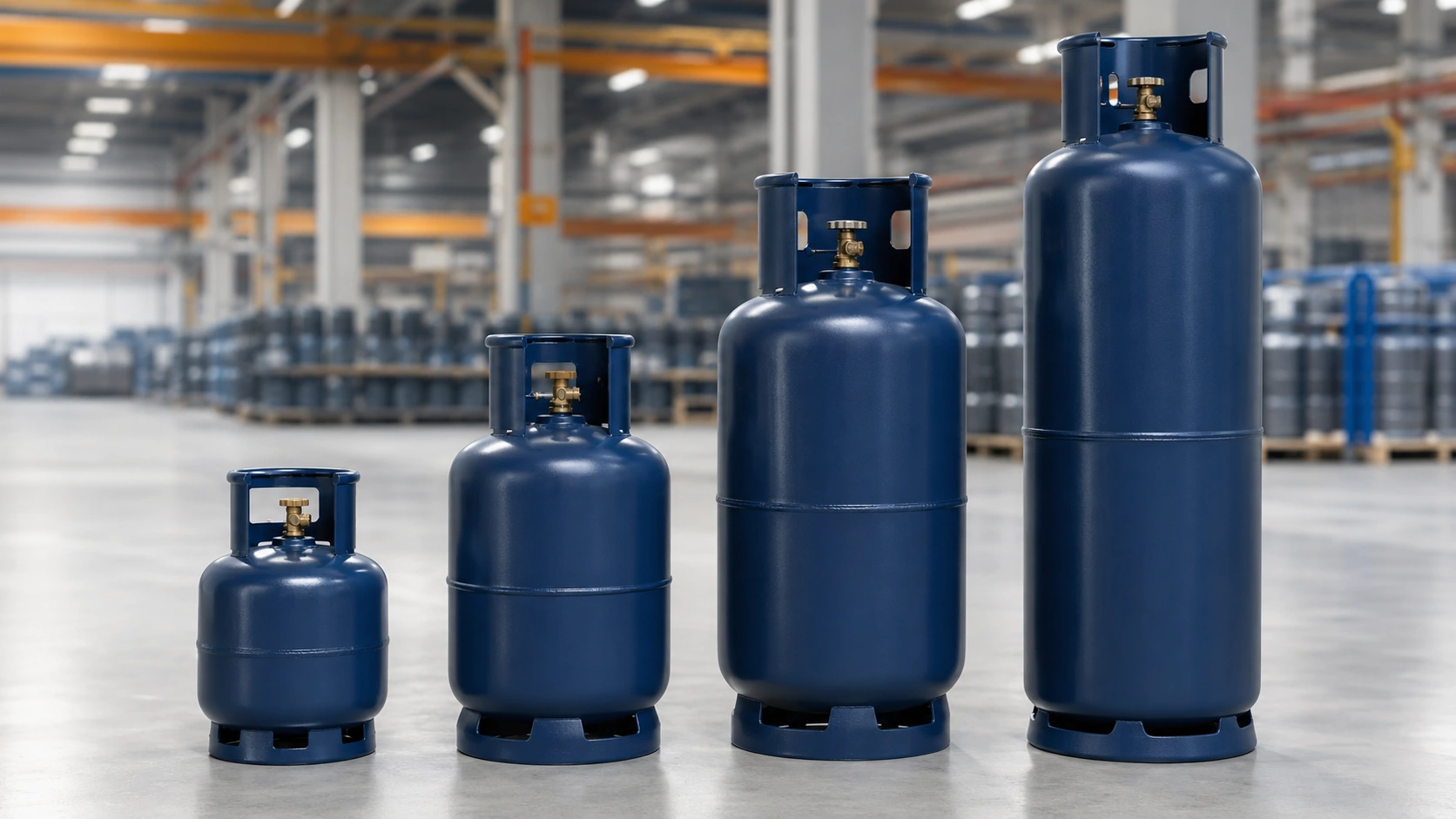
The main LPG cylinder types are portable, domestic, commercial, and light-industrial cylinders. However, those labels alone are not enough for a sound purchasing decision. Buyers must also consider capacity, consumption rate, handling limits, valve compatibility, filling infrastructure, and destination-market requirements. A domestic cylinder and a commercial LPG cylinder may store similar fuel, yet operate in very different distribution and usage environments.
LPG may contain propane, butane, or a mixture of both, as described by the U.S. Energy Information Administration. Buyers who first need to clarify fuel composition can review propane vs LPG differences before comparing cylinder sizes and applications.
LPG gas cylinder types are most usefully classified by application rather than appearance. Color, handle design, or a familiar capacity does not prove that a cylinder will be accepted by a local filling plant.
Portable cylinders suit camping, outdoor cooking, mobile food service, and low-volume backup use. Domestic cylinders usually serve household cooking and hot-water applications. Commercial cylinders are selected for restaurants, hotels, cafeterias, and other operations with higher consumption. Light-industrial models may support process heating or other approved fuel applications.
Each category also has limitations. A portable cylinder may require too many changeovers in a busy kitchen, while a large commercial cylinder may be difficult to handle in a small retail or mobile environment.
| Cylinder type | Typical sizes | Suitable applications | Main purchasing concern |
|---|---|---|---|
| বহনযোগ্য | 3–6kg | Camping, outdoor cooking, mobile use | Weight, valve fit, portability |
| Domestic | 6–15kg | Household cooking, small retailers | Local circulation size and markings |
| Commercial | 20–45kg/100lbs | Restaurants, hotels, cafeterias | Consumption, storage, changeovers |
| Light industrial | Project-dependent | Approved heating and production support | Standards, pressure, documentation |
একটি 6kg portable LPG cylinder represents the smaller end of this range, while buyers comparing several capacities can review the full range of exported LPG cylinders.
The commercial vs domestic gas cylinder question cannot be answered by capacity alone. Market classification may depend on local regulations, distribution channels, markings, valve systems, and approved applications.
Domestic applications generally have moderate, intermittent demand. Restaurants and commercial kitchens may operate burners for many hours, making changeover frequency and supply continuity more important.
Buyers should begin with daily LPG consumption, the desired time between cylinder changes, available storage space, and safe handling limits. An undersized cylinder can increase labor and interrupt operations. An oversized cylinder may create transportation, storage, or manual-handling problems. The correct domestic cylinder vs commercial cylinder decision therefore comes from the operating profile—not from choosing the largest available model.
Two cylinders of similar size may use different valve outlets, threads, pressure-related components, or permanent markings. A mismatch can cause filling-station rejection, regulator connection problems, delayed market approval, or unsafe adapter use.
For domestic distribution projects, a 9kg LPG cylinder for household and light commercial use may provide a useful reference point. Its valve configuration, however, still needs to match the destination market. Before ordering, the buyer should confirm the filling connector, regulator inlet, required markings, applicable standard, and whether the proposed cylinder design is accepted by local authorities and filling partners.
The answer to “How do I choose an LPG cylinder size?” should begin with demand and logistics. Nominal LPG capacity is important, but so are water capacity, external dimensions, tare weight, valve protection, storage layout, and refill availability.
Small cylinders from 3kg to 6kg are suited to portable and low-consumption applications. A 9kg unit can serve household, outdoor, and selected light-commercial channels.
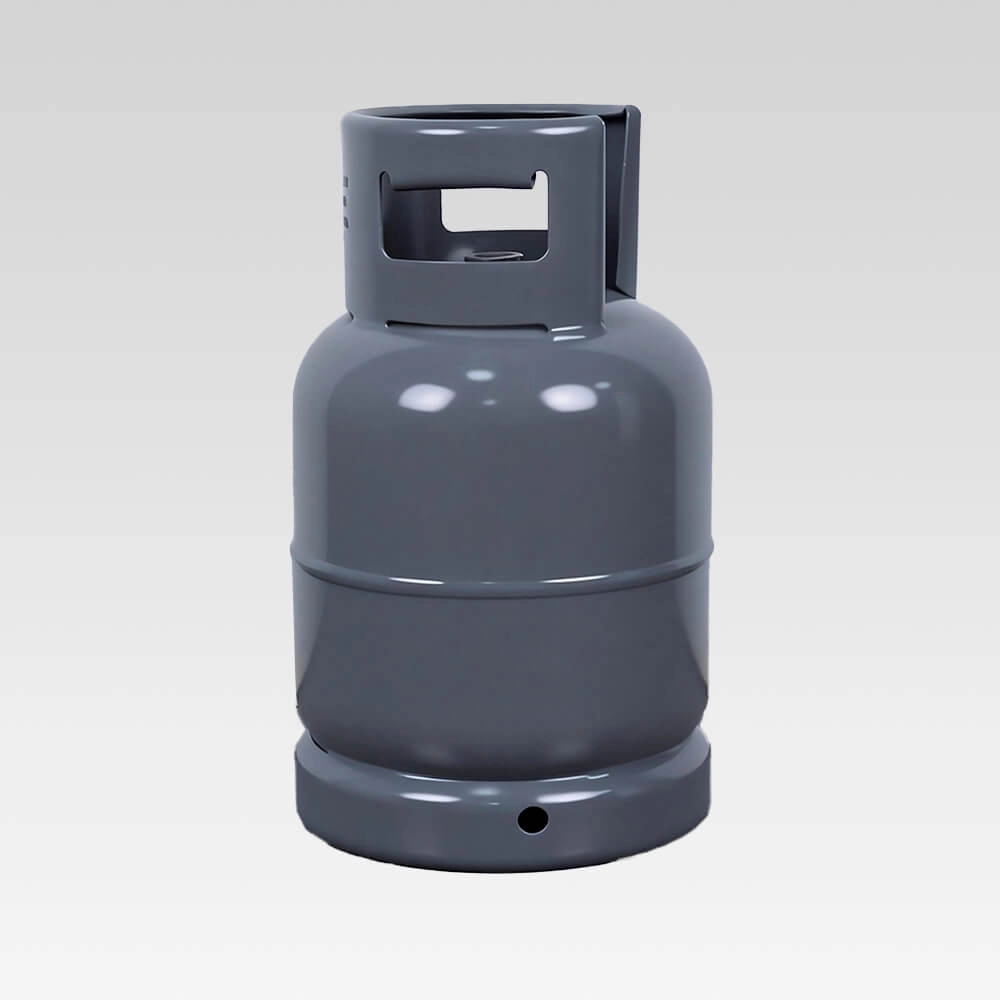
Sizes around 12.5kg to 20kg may fit residential distribution, food stalls, restaurants, and small businesses, depending on local practice.
For reference, Mintai Cylinder lists its 20kg steel cylinder with a 47.7L water capacity, 1.8MPa working pressure, and 3.4MPa test pressure. Those figures should still be reviewed against the project specification rather than treated as universal requirements. Buyers should also calculate expected changeovers and confirm that employees or delivery teams can handle the selected cylinder safely.
A 45kg/100lbs LPG cylinder may suit restaurants, hotels, cafeterias, and light-industrial users that need longer operating intervals between changes. Mintai Cylinder lists this model with a 108L water capacity, 1.8MPa working pressure, and 3.4MPa test pressure.
The larger size is less suitable where access is restricted, storage space is limited, or cylinders must be moved frequently without suitable handling arrangements. Buyers should confirm the installation layout, regulator or manifold requirements, ventilation, cylinder restraint, delivery method, and local rules before selecting a 45kg LPG cylinder for commercial use.
Many cylinder problems begin before production. An incomplete request for quotation can leave the manufacturer guessing about the destination standard, valve interface, filling method, or actual application.
A cylinder may have the requested capacity but still be incompatible with the buyer’s market. Common causes include the wrong valve outlet, an incompatible regulator connection, missing permanent markings, or documentation that does not match local approval requirements.
Before production, buyers should obtain written confirmation from the filling partner and, where necessary, the relevant local authority. A regulator sample, valve drawing, and filling-connector specification are more dependable than photographs. When compatibility remains uncertain, the next step is sample testing—not a bulk order based on visual similarity.
Selecting a small cylinder to reduce unit price may increase total operating cost through extra deliveries, frequent changeovers, and downtime. Choosing a large cylinder without reviewing site access can create handling damage, storage congestion, or difficult installation.
The risk can be reduced by documenting daily consumption, peak demand, desired changeover interval, transport method, and available floor space. Commercial buyers should also review the condition of valve guards, foot rings, coatings, and stacking arrangements. The World Liquid Gas Association cylinder-management guide notes that gross weight can limit size selection and that standardized sizes can improve filling and distribution efficiency.
A useful bulk LPG cylinder quotation requires more than a capacity and target price. The specification should describe the market, application, operating conditions, and documentation expected from the supplier.
A B2B request should include:
If any item is unknown, it should be resolved with the filling plant, regulator supplier, or local technical authority. “20kg LPG cylinder” alone is not a complete production specification.
Before mass production, the buyer and supplier should approve drawings, specifications, valve configuration, markings, testing requirements, and packaging. The World Liquid Gas Association also recommends agreeing on the design code, manufacturing drawings, material, welding, testing, stamping, and labeling before production.
A physical sample should be checked with the actual regulator or filling connector when possible. Buyers should also review the requested test records, traceability format, valve protection, stacking method, and container-loading arrangement. An acceptable paint finish does not confirm pressure compliance, documentation accuracy, or market compatibility.
Supplier selection should focus on evidence that the approved specification can be reproduced across an entire order.
A qualified LPG cylinder supplier should be able to explain which standard applies, how materials and production batches are identified, and what inspection records accompany the order. Buyers should verify that certificates and test documents relate to the proposed cylinder rather than accepting an unrelated general certificate.
Useful checks include manufacturing drawings, material records, welding controls, pressure-test documentation, permanent markings, and inspection arrangements. Warning signs include inconsistent specifications, unclear valve information, unsupported claims of worldwide compatibility, or reluctance to document the agreed configuration.
Production capacity matters only when it is supported by repeatable controls. Buyers should examine whether the supplier can maintain approved dimensions, valves, markings, coating, and packaging across repeat orders.
মিনতাই সিলিন্ডার manufactures welded steel LPG cylinders in Hangzhou, China. Its published company information lists a 35,000-square-meter facility, six automated production lines, and annual output of two million cylinders. The product range includes 3kg, 6kg, 9kg, 12.5kg, 15kg, 20kg, and 45kg/100lbs models. Final suitability, certification, valve configuration, and labeling should still be confirmed for each destination market and purchase specification.
Choosing among LPG cylinder types requires more than comparing capacity and unit price. The buyer should define the application, consumption, changeover target, local standard, valve interface, documentation, and handling conditions before selecting a model or supplier.
For a project-specific review, buyers can মিন্টাই সিলিন্ডারের সাথে যোগাযোগ করুন with the target country, intended application, required size, regulator or valve information, order quantity, and branding or packaging requirements.
The main practical categories are portable, domestic, commercial, and light-industrial cylinders. The correct category depends on application, capacity, handling requirements, valve configuration, and local market rules.
The difference usually involves consumption level, capacity, duty cycle, distribution channel, markings, and approved use. A commercial cylinder is not automatically a higher-pressure cylinder; the pressure rating must be verified from its specification.
The right size depends on daily consumption, burner demand, storage space, delivery frequency, and local availability. A 20kg or 45kg cylinder may suit some restaurants, but the complete gas system should be reviewed before selection.
Possibly, but only when its design, valve, markings, pressure rating, documentation, and approvals meet each destination market’s requirements. A cylinder accepted in one country should not be assumed to be accepted elsewhere.
Provide the target market, application, capacity, water capacity, dimensions, applicable standard, working and test pressures, valve or regulator specification, markings, quantity, coating, and packaging requirements.